Almonds and Pines
Discovering Cybele at the Ancient Ruins of Ephesus

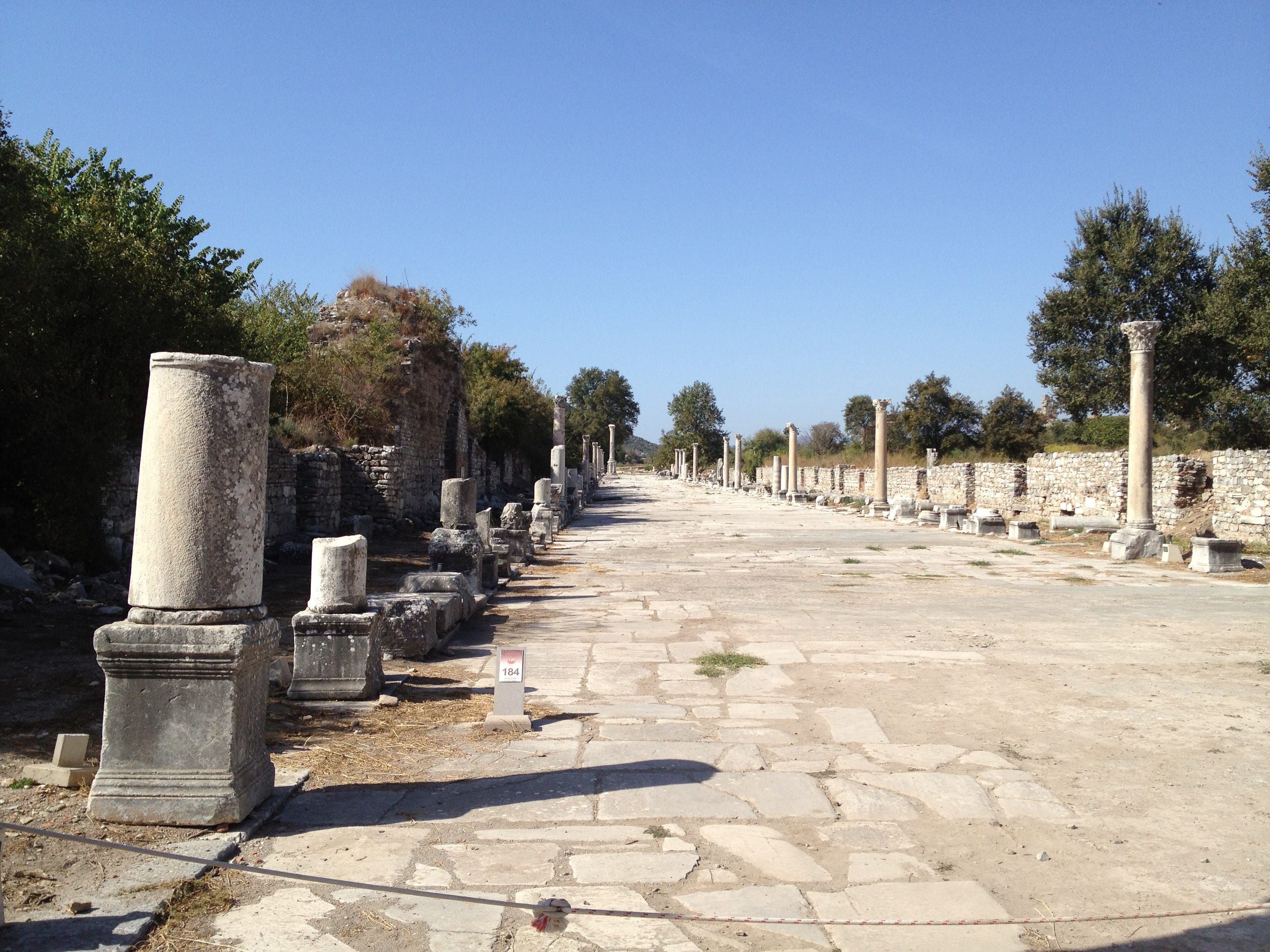
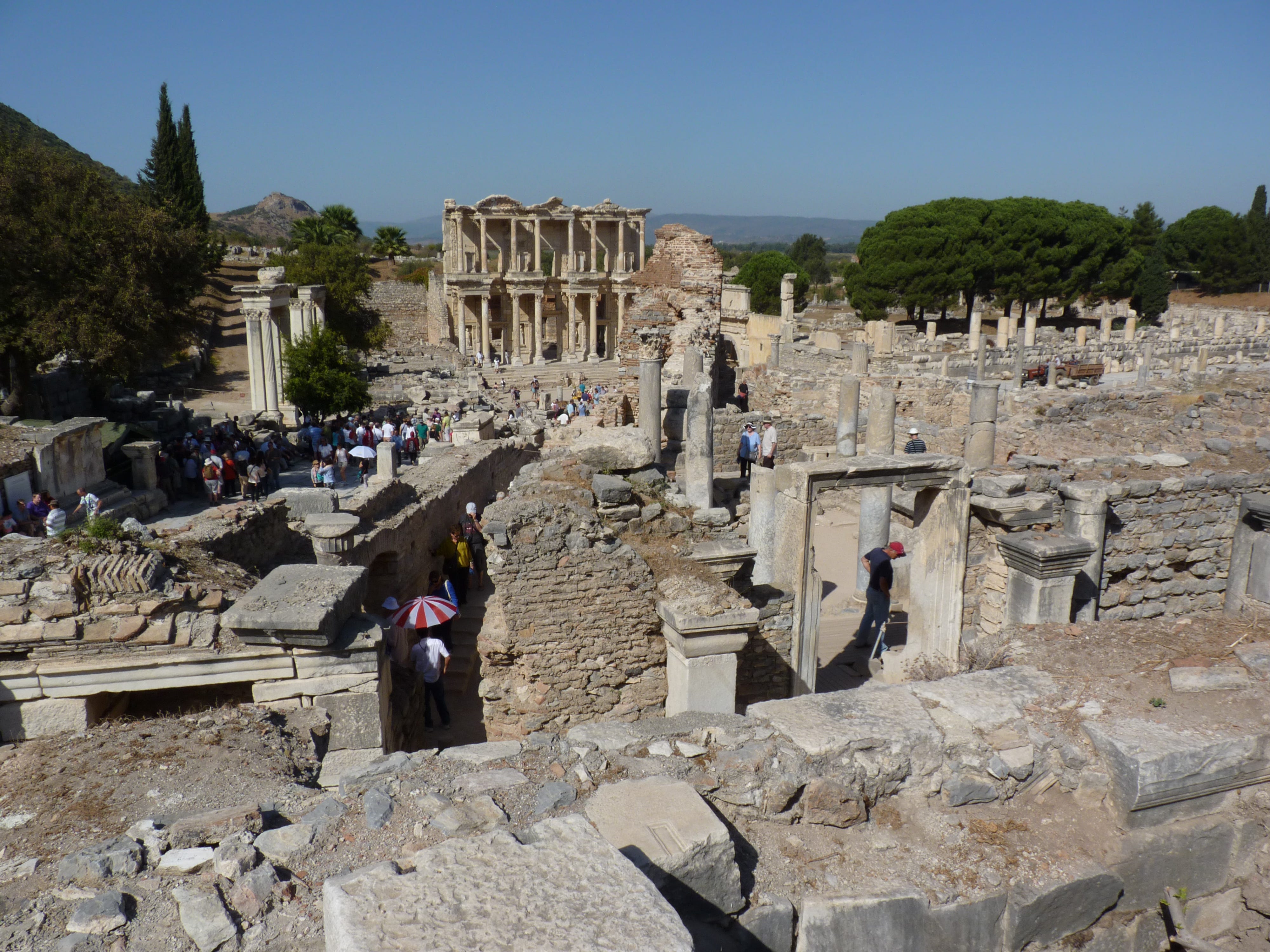
In the Autumn of 2012 I took a boat from the island of Samos and entered Turkey. I remained there for a month and walked some of the Lycian way. There I snatched the opportunity to visit one of the most important cities of the ancient Grecian world, Ephesus. The ruins of this once thriving metropolis lie in dry foothills near modern Selçuk. The site is extensive to say the least, and busy – thousands of tourists visit the site and their presence gives you a sense of how it might have been: not deserted ruins but a city with streets thronged with people. A city of buildings, shops, markets and temples thrumming with the cries of vendors and preachers, prophets and philosophers. This would have been a city of noise.
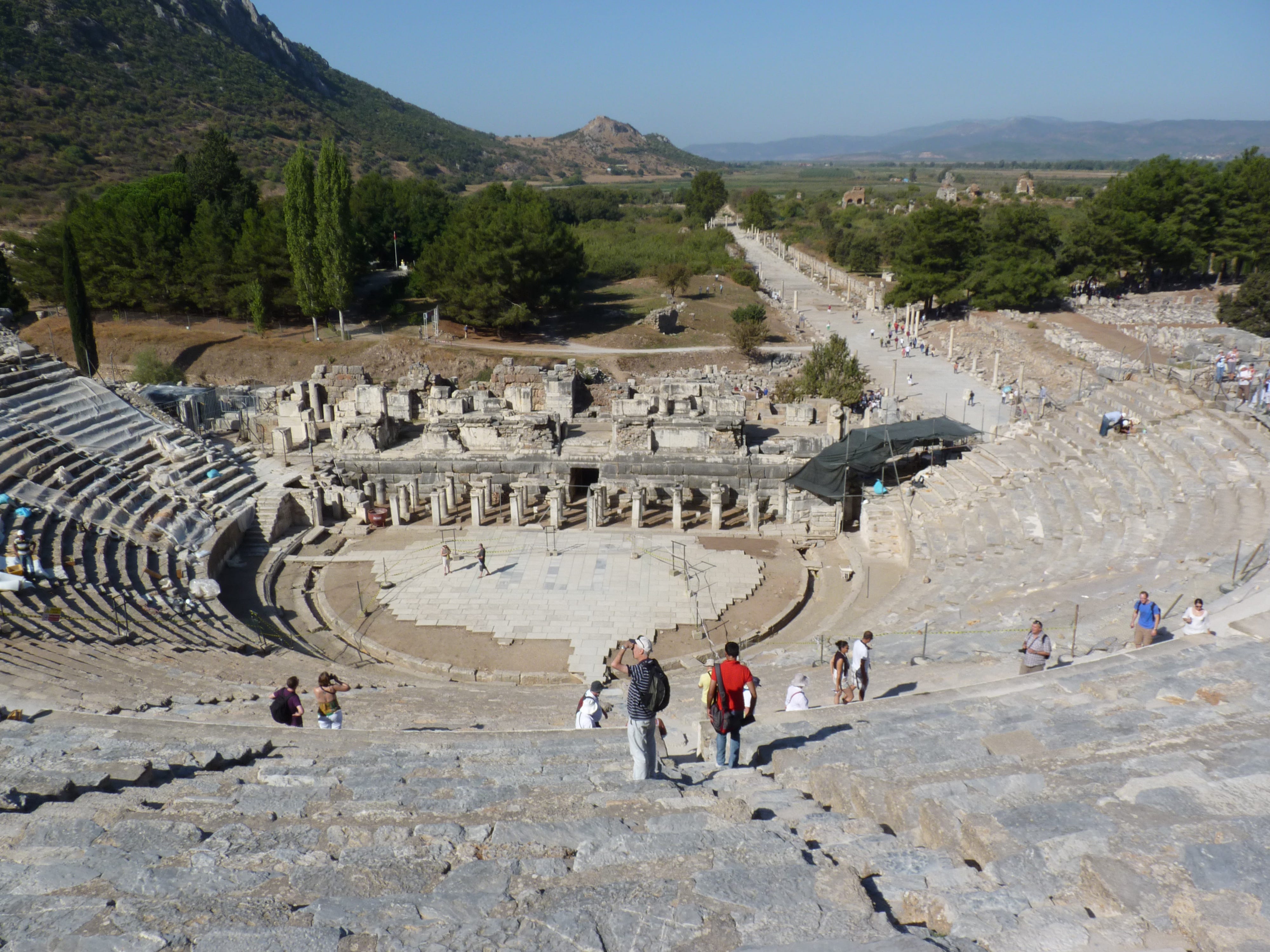
As a lover of history and stone-carving Ephesus was inspirational to me. However, it was a blank slate and I knew little of its history. Suffice to say that Ephesus seeps into the deep recesses of human endeavour. In the 1st millennium BCE Greece expanded its boundaries, spreading across the Aegean towards Italy and modern day Turkey (then known as Ionia). The city was already there, but under the Ionian League it flourished in the 2nd century BCE. When the Greek empire waned the Romans rebuilt it and again the city thrived. Estimates put the population anywhere between a quarter of a million to as little as 60,000 people – these are big swings in numbers, perhaps reflecting the inadequacy of population models to estimate how much space a person needs to live. The fact is we just don’t know.
Ephesus was at a crossroads of cultures, and here you would find settlers, travellers and traders from India, Persia, Egypt and beyond. You can easily imagine that the city was a vibrant and hectic place, with wide boulevards, numerous temples and a huge amphitheatre (with a 25,000 seating capacity). The city was well planned, with aqueducts to provide water to numerous wells. Stone carved culverts network across the land.
Today the ruins lie several kilometres from the sea, but Ephesus once possessed a harbour. It was here that Mark Anthony and Cleopatra arrived, as well as a stream of other famous generals, kings and philosophers. Nowadays the river that once provided entry to the bay has long since clogged with silt.
Although the patron goddess was Artemis, a profusion of deities and philosophies thrived within the city walls. The apostle Paul preached there, only to be ousted by angry traders and craftsman who saw his ideas as a threat to the flourishing trade in Artemis statuettes. I suppose, if they could have foreseen the religious fervour of Christian evangelists, they might have started fashioning crosses or icons! Perhaps in time they did. Either way the passage in the Acts of the Apostles describes how converts who’d previously practised magic, when converted, burned their magical books.
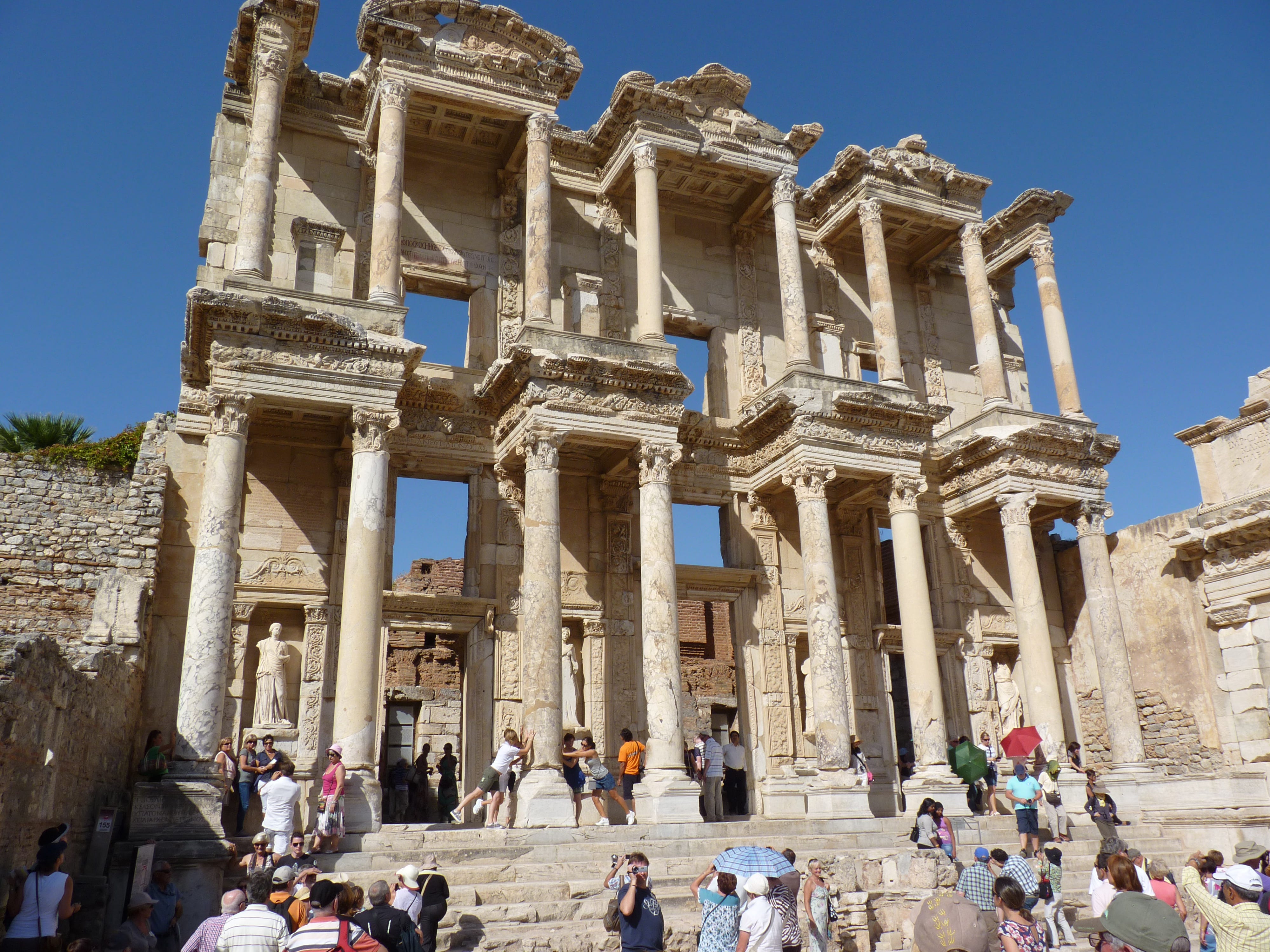
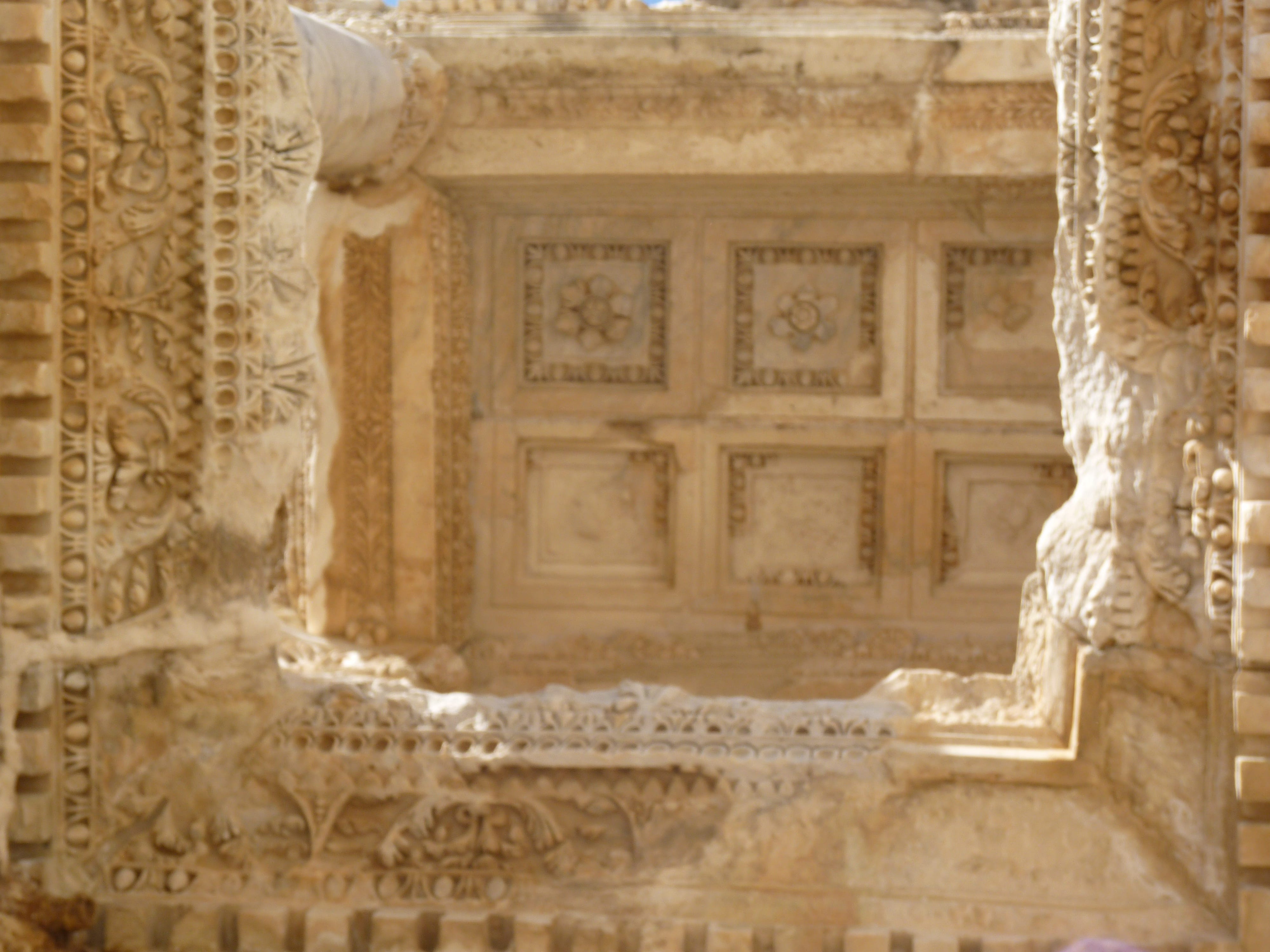
As well as its famed temple to Artemis (which Alexander the Great rebuilt) there was also the Library of Celsus, built by Gaius Julius Aquila to honour his father in 110 AD. Either side of its main portal statues of Wisdom and Virtue were frozen in aspects of solemnity. It was once three stories tall and crammed with manuscripts from across the ancient world. Its many wide windows enabled light to pour inside. Such places as these inspire within me the desire to be able to travel back in time to see what they contained.
I remember that, according to my map, there was a Sanctuary dedicated to the goddess Cybele, to which I felt particularly drawn. It was located away from the tourists throng, and was roped off from the rest of the site. My only journal entry that day reads:
I snuck through the gate and tried to locate the sanctuary of Cybele; the most likely spot being a large quarry-like setting with carved alcoves for statues way up high in the rock face. Trees and rocks blocked the gully rent into the mountainside. This is the place, I thought, this is the place.
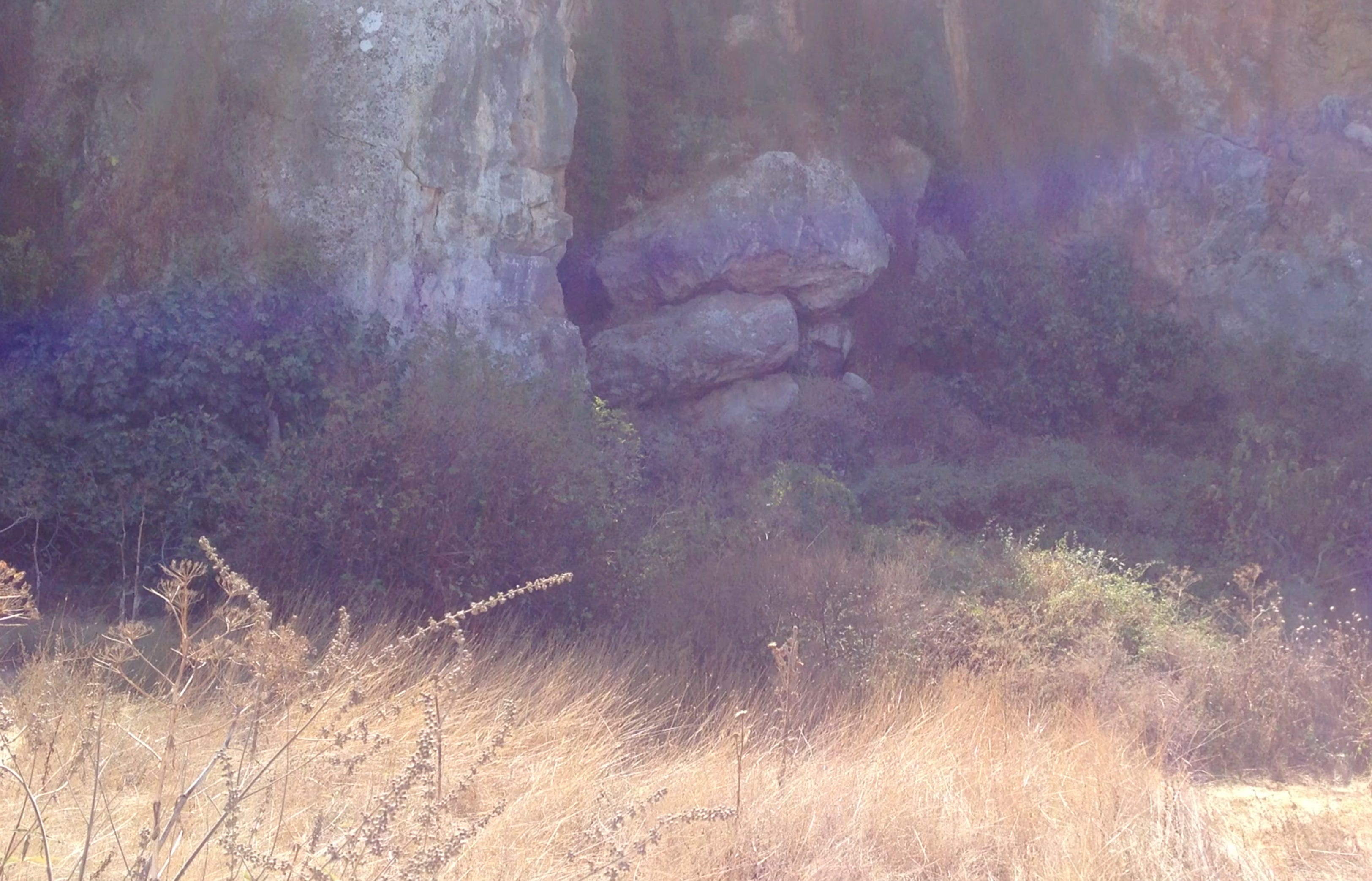
For weeks now Goddesses had been calling to me, and I’d been drawn across the Aegean, from island to island to arrive in Turkey (you can read a little about that trip here). At the sanctuary of Cybele I was confronted with a very un-city like panorama. Within the grove something wilder was present, something that couldn’t be contained within any temple locked within a network of streets. It is poignant to note that almonds trees still stood here, their leathery leaves rattling in the warm breeze and their fruit littering the red earth.
There are a number of stories that recount the birth of Cybele. According to Pausanius, lusty old Zeus desired the mother goddess, Rhea. The goddess was resting in the guise of Mount Agdus and so Zeus crept up and forced himself upon her. As the goddess fought to stave him off, Zeus ejaculated, the drops of his semen splashing the sides of the mountains, splattering rocks and boulders. From these drops the strange hermaphrodite being known as Agdistis was born.
Dionysus gathered other gods about him and they spiked the waters of the spring where Agdistus drank with wine. Falling into a stupor and finally into slumber, Agdistus slept, oblivious as Dionysus crept upon them and bound a cord around their genitals. Finally waking from this deep slumber, groggy and a little disorientated, Agdistus rose. Unaware of the cord that bound their genitals, they went toward the spring to quench their thirst. But when the cord drew tight it ripped Agdistus’ male genitals away. From these severed remains, potent with divine force, the first almond tree grew.
Here, the tale becomes stranger, for Nana, the great mother of the region, collected some of the almonds and kept them in her lap. But one fell between her thighs, a wayward seed that entered her womb. Thus, in the way of divine myths, she became heavy with child. This babe was Attis. The son of the now female Agdistus, who was renamed Cybele (in some versions Nana is equated with Cybele: thus the goddess had impregnated herself – surely a miracle to rival Christian parthenogenesis).
The Goddess Cybele fell in love with her son. So strong was the desire to claim his love that she was insanely jealous of any female suitors. When Attis wished to marry a young mortal woman, his mother arrived at the wedding and drove all present to madness. Attis’ bride plunged a knife in her own breast and the heartbroken god wandered, stricken by madness until he slumped beneath a pine tree and sliced off his genitals in despair.* Lying in the shade of a pine tree he bled out, but his body didn’t rot and his hair still grew.
Of course, this is only one version of the tale, there are others. Ovid has it that Attis became a pine tree and flowers sprung from the blood of his wound.
Born of the fruit of Agdistus’ maleness, Attis is imbued with the regenerative and fecund powers of both his mothers. The regenerative qualities of Cybele and Attis were respected throughout the Classical world, where they were often honoured as a pair. In Rome, a festival held in their honour is recorded as taking place as late as the 5th century CE. There, Dendrophoroi (tree-bearers) carried a felled pine tree through the streets of the city every March 22nd. The pine was the perfect emblem of Attis, for it was ever young, ever dying. Together Cybele and Attis represented the cyclical rise and fall of nature, its death and resurrection.
Cybele is an eastern goddess whose popularity gained a foothold within Rome by the second century BCE. At the temple of Magna Mater, built upon the Palatine, her worship involved orgiastic rites – with which many of the notables of Rome were uncomfortable. She was often known as Mother of Mothers and referred to as Queen. In depictions Cybele sometimes sits upon a throne, flanked by a pair of lions. But there, in that grove near the ruins of Ephesus, Cybele was once honoured as the Mountain Goddess, her refrain captured in notes of marjoram, thyme and sage. I recall that I sat there, far from the throngs of tourists and their camera eyes. For a moment all was still as stone, as if the flow of time paused. No bird spoke, not breeze whispered. And then it was gone and time was flowing once more. I stooped to pick an almond from the ground and made my way from the mountain, the prescient seed pressed tight in my pocket.
Notes:
*Some versions have it that Cybele was merely his consort, and that she made a pact of celibacy with Attis – the breaking of this vow meant that he would castrate himself.
References:
European Paganism – Ken Dowden
The Imperial Cult & Development of Church Order – Allen Brent
Indo-European Gods – Garrett Olmstead