

Demeter in Black
Inspiration at the Naxian Sanctuary

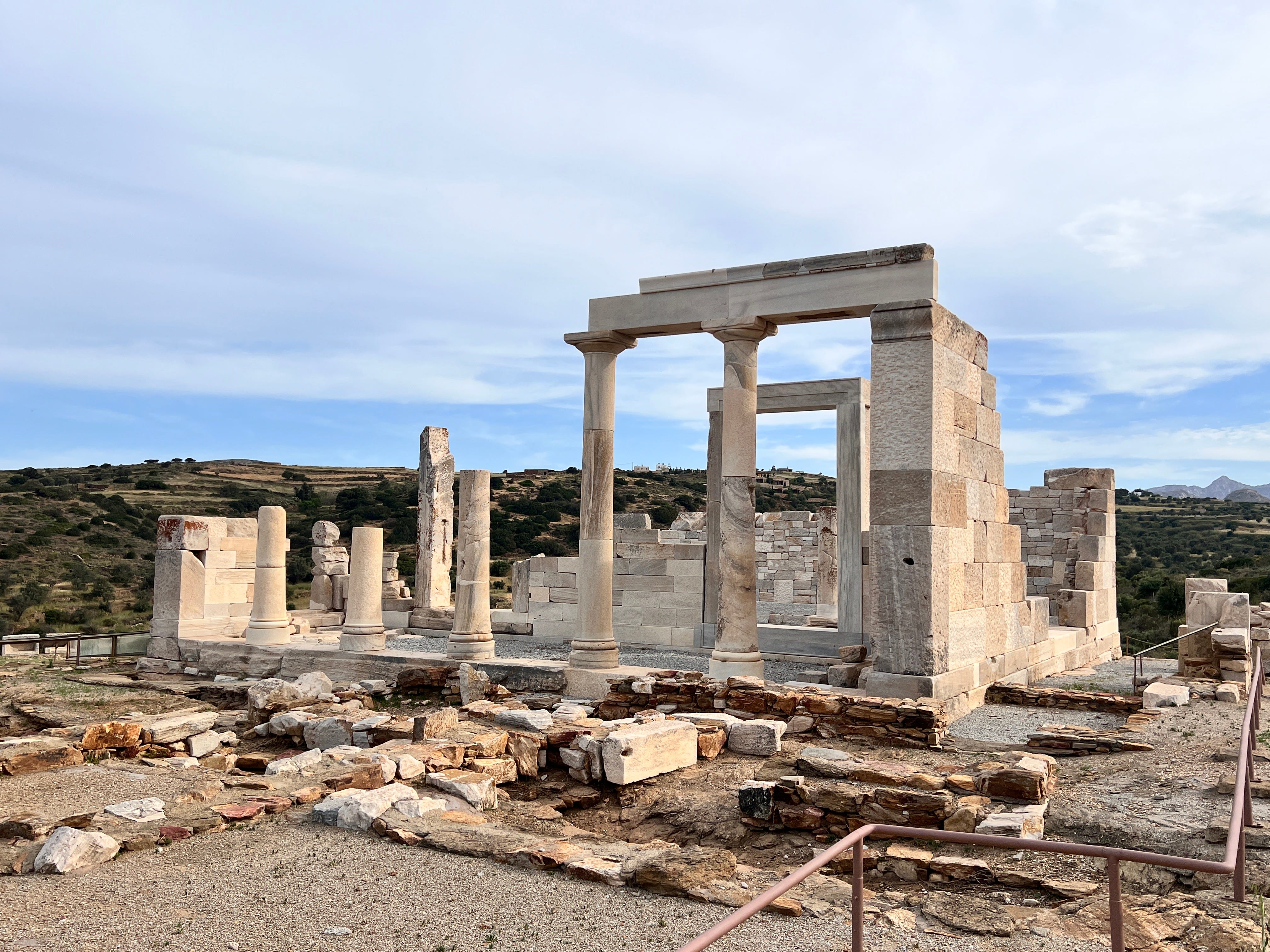
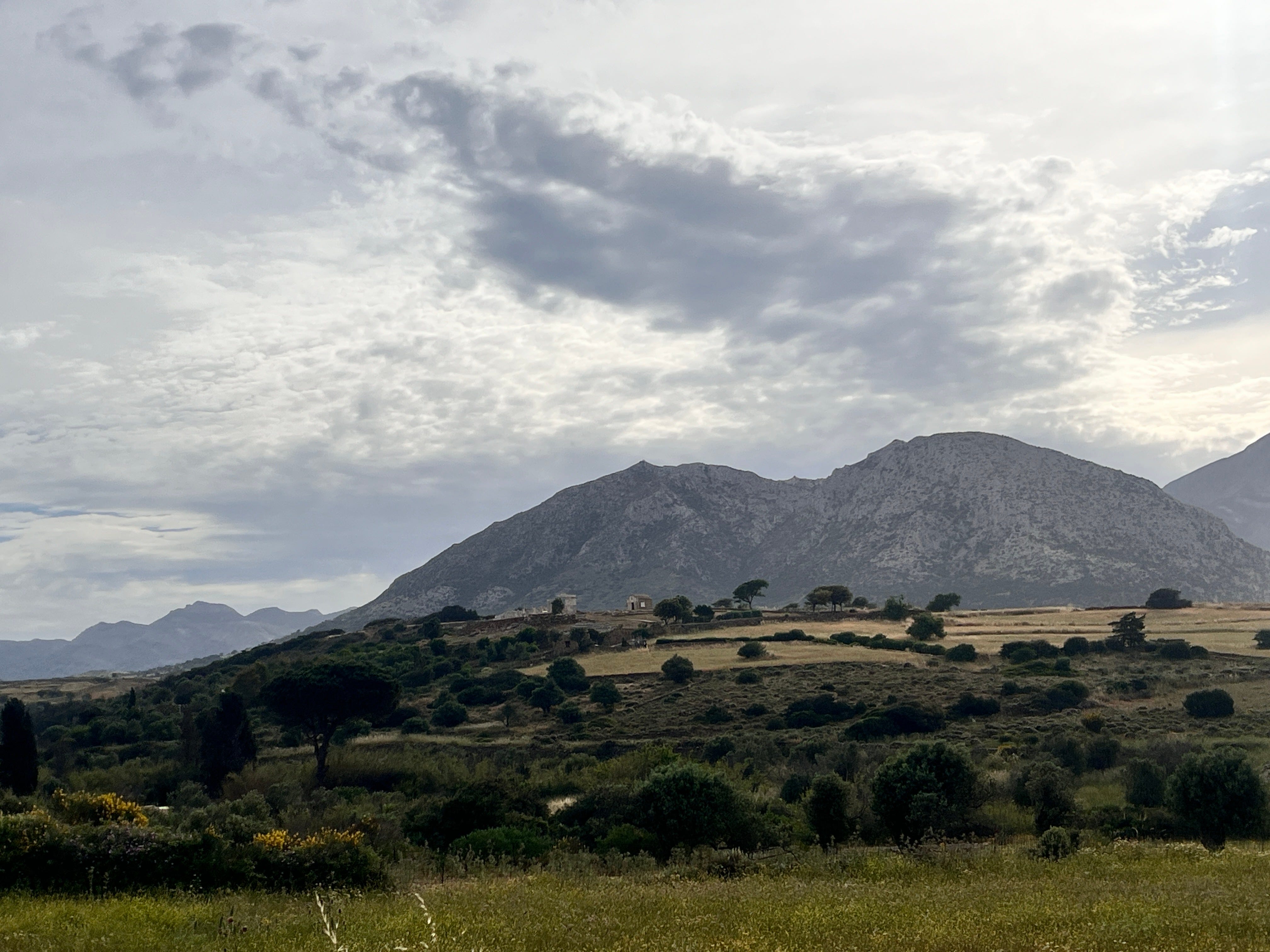
Demeter’s temple on the island of Naxos stands on a low foothill overlooking the Gyroulas valley. Around it the inland mountains rear in pale limestone waves, as if they were frozen in a geological instant… with the great spur of Mount Zas rising above them all. From this less elevated position I imagine the goddess staring at the mountain defaintly.
She would have good reason to. According to myth Demeter was raped by her brother Zeus, giving birth to Persephone – and further insulted when another of her brothers, Hades, stole her daughter with the intent to marry her. She was also raped by Poseidon, who relentlessly pursued her when she assumed the form of a mare to escape his advances. As a stallion he forced himself upon her. It was an act that steered Demeter to wear a black gown and enter a period of purification. In this form she was Demeter Melaina (the Black), until she cleansed away the grime of Poseidon’s assault in the River Ladon, becoming Demeter Lousia – the Bathed.
But Demeter is many things. She is a giver of laws (as Demeter Thesmophoros), while her epithet Elusinia hints at the importance of her role in the sacred Eluesian rituals. There is much about her that conflates her worship with Gaia, the Earth Mother; for she is giver of grains and a goddess of abundance. When she cleansed herself and wore the black gown, like a grim flag of mourning, to mark the sea-god’s assault upon her person, crops stopped growing and people starved. The same occurred when her daughter was taken to the Underworld – for, stricken with grief, the Goddess searched high and low for her daughter until Helios revealed her whereabouts. However Persephone, having partaken in the food of Hades realm, could never return for a full year and had to divide her time between the realms of the upper and lower worlds. Her absence marked winter, when Demeter mourned her daughter’s absence. The pair of daughter and mother were sometimes honoured as the Demeters.
Of course, just as she is a goddess of life, so too she is that of death. Perhaps this symbolism is encapsulated in the myth of her quest to find Persephone. In ancient Athens the dead were known as Demetroi. It is well attested that the goddess performed a role of underworld goddess.
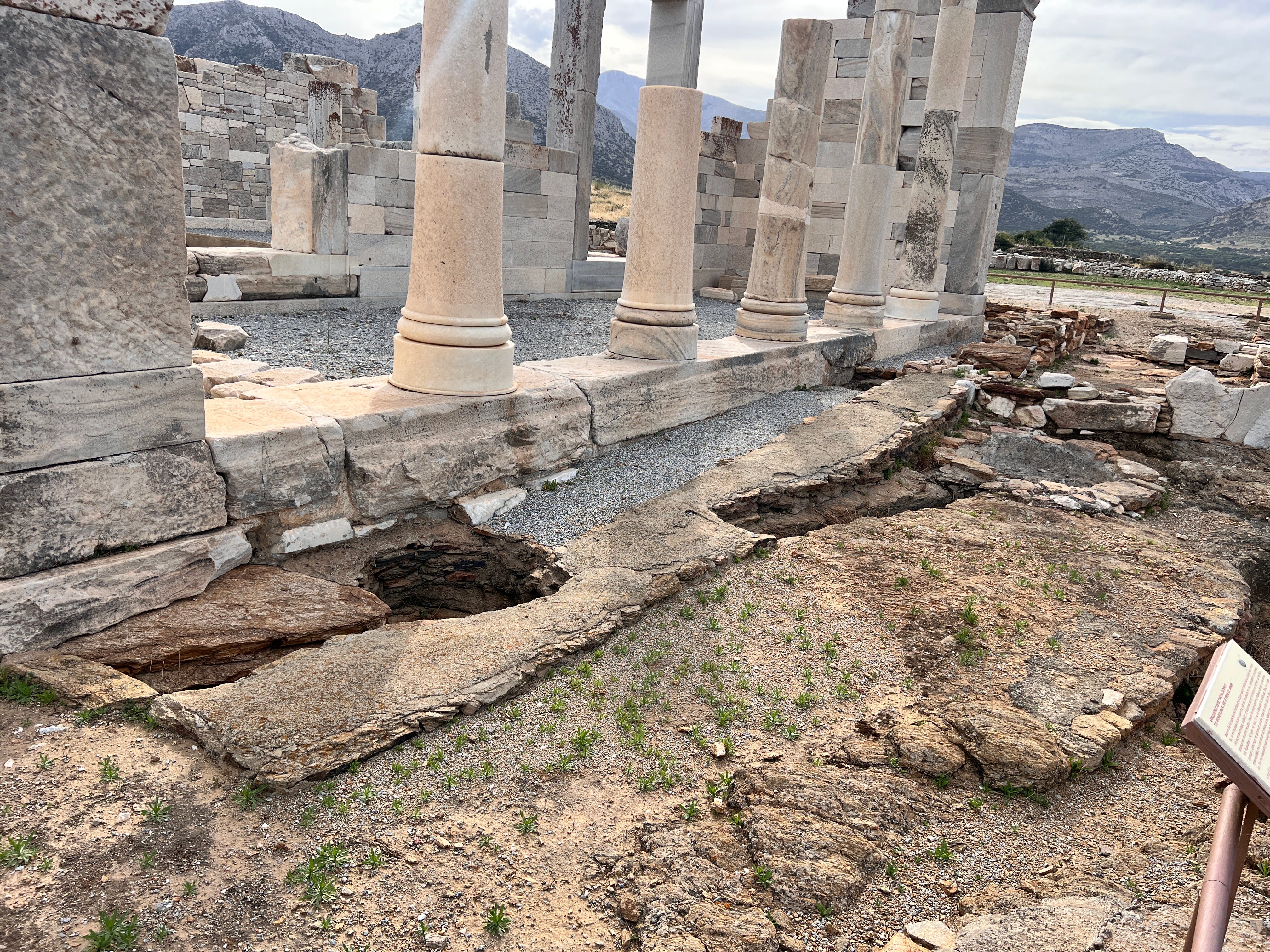
At her temple on Naxos remains of two pits, linked by a narrow channel, are preserved outside what remains of the reconstructed temple. It is said that one pit was for life, the other for death. Perhaps rites involved the placing of living grain, fruit, etc into one and, over time, the fermenting remains would slide down the channel into the other pit. Such a ritual displays an awareness of the process of life and death, as evidenced in the physical world. There is no covering and shying away from reality here, but an acceptance that it’s all part of a sacred cycle. Under the Goddess’ watchful eye these things must be. Acknowledging and celebrating them helps alleviate anxiety and fear of death.
Different regions held their own rites and festivals, honouring the goddess under localised names. Such appellations were probably names that extended far back into antiquity. Surely, as tribes became nations, a certain syncretism came into play. But, when pared back to their essence, we find similar concepts which were obviously recognised as such. If the goddess goes by many names, so be it. She is many things, under many guises: Gaia, Demeter, Despoina, Deo… there are many names.*
But as I stood at the temple of Naxos Demeter felt very personal and very regional. I could imagine her origins in the graceful Naxian marbles that fill the museum of Chora – figures dated to at least two thousands years BC. These Cycladic mothers are stunning works of art – they encapsulate a strength and finesse, with their shield-like faces, honed to the bare essence of form, faces delineated with a simple nose ridge. It is likely that some were painted, and in the Museum of Cycladic art in Athens you might spot some with the ghostly remains of black rimmed eyes; eyes that stare at us from remote antiquity.
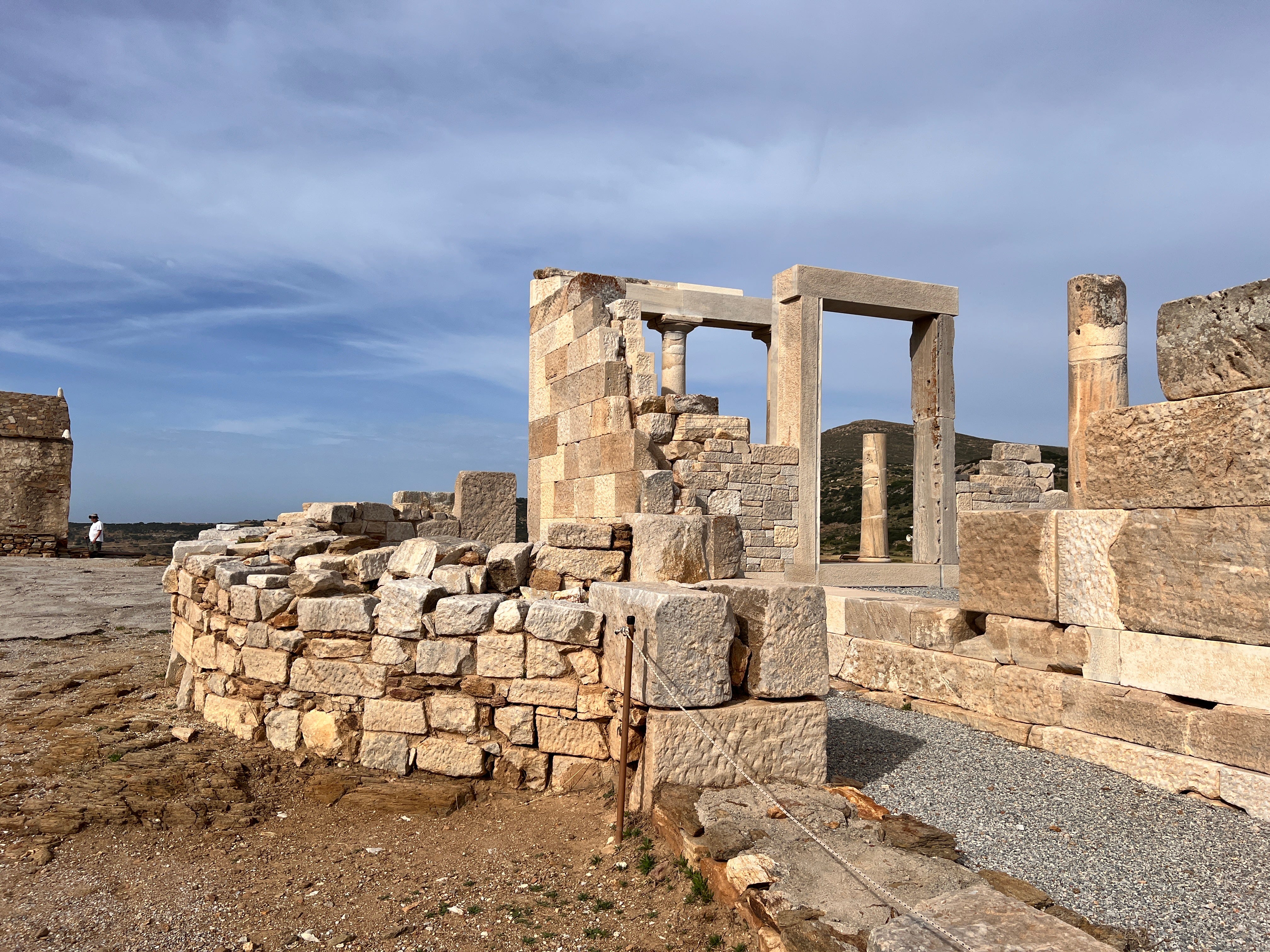
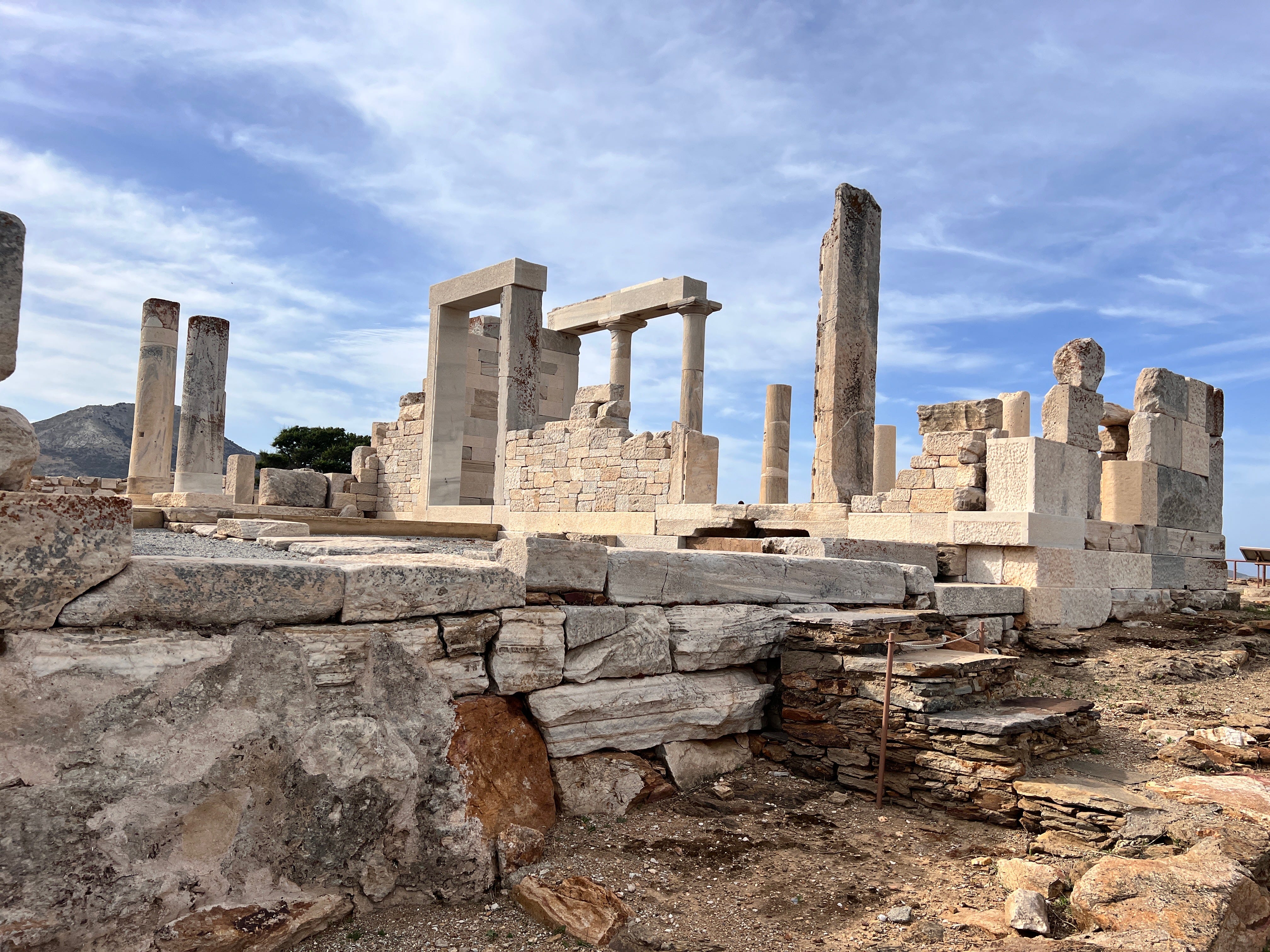
The spot feels perfect, a gentle rise crowned with a once quite extensive temple. Its classical form is dated to about 530 BC, and it remained in use into the 4th century AD. However, after Theodosius I created the Edict of Thessaloniki, outlawing pagan worship in the Roman Empire, the temple was dismantled (the statues very likely vandalised), and the remains used to build a Christian basilica. And yet the people found it hard to let go of their pagan deities. In many places she was still worshipped as Saint Demetra. Thus, in a sense and though diminished, her ‘cult’ remained.
Demeter in her obsidian gown
Goddess with the red-rimmed eyes
raped by brothers without a shred of shame
She stares at the mountain
at the old man’s face
which blushes each morning
every evening
No wonder,
she is stronger
Demeter in obsidian holds
the life of grain,
of fruit and flower
she wields the right
to hold seed to ransom
Notes:
*I’ve previously mentioned a quote from Apuleius’ The Golden Ass in which this syncretism is exemplified.