

Geasa
The Ritual Taboos of the Celts

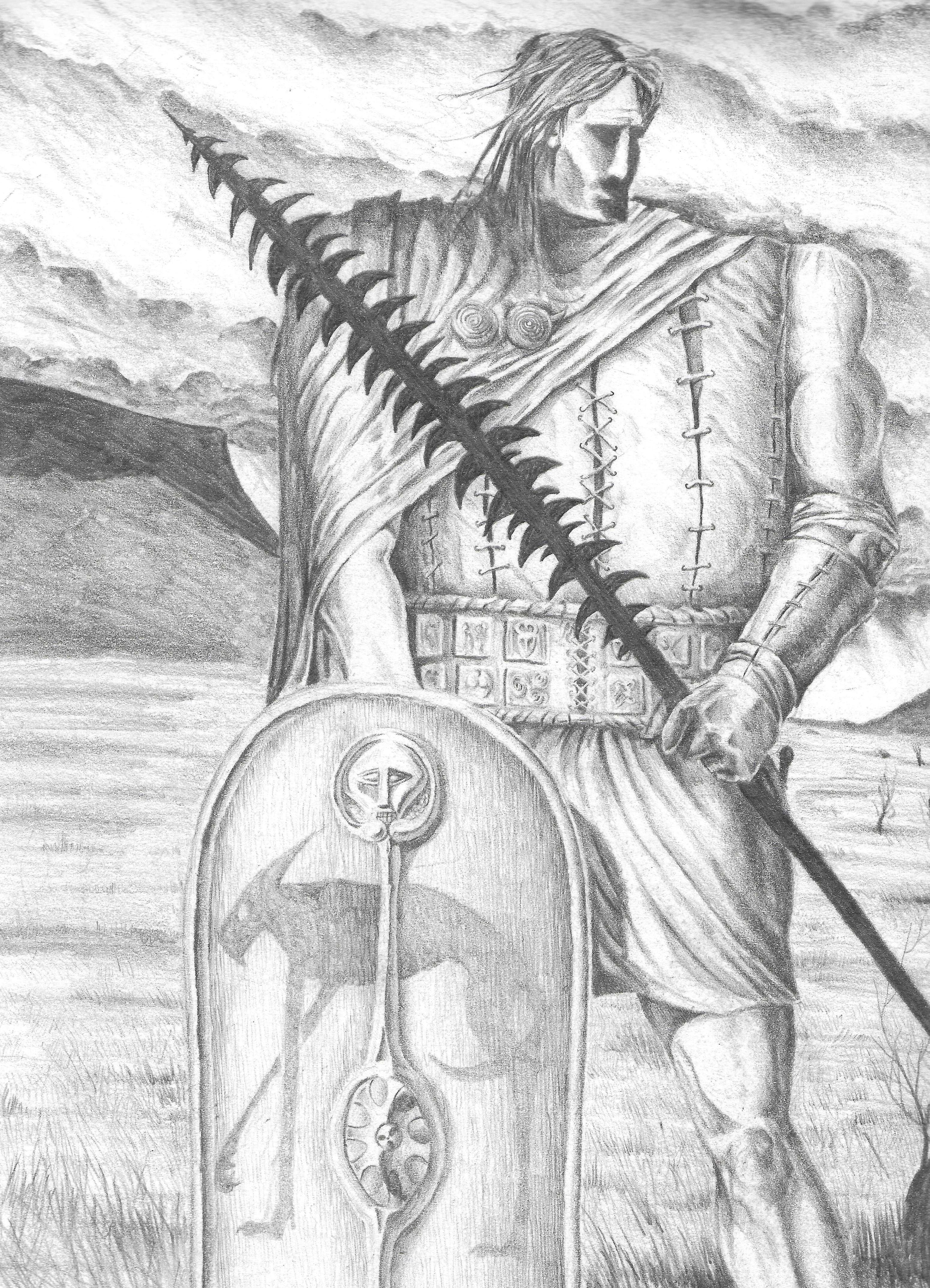
The idea of the geasa appears in Celtic lore from Ireland.* While not exactly a curse it can act like one. A geis was a prohibition placed upon an individual, but they were usually imposed in groups (as geasa) upon an individual. They feature in many Celtic tales, such as those of Cú Chulainn and Fionn Mac Cumhaill. Kings and chiefs were also subject to them and we know from The Book of Rights (Lebor na Cert) the types of prohibitions placed upon leaders. The word itself may have roots in the Gaelic for ‘pray’, ‘request’ or even Indo-European *ghed, which means ‘to seize’, ‘take’: geasa literally ‘seize control’ of the fate of those they are imposed upon (faoi ghessa means ‘under bonds’).
In Togail Bruidne Dá Derga (The Destruction of Da Derga’s Hostel) the geasa placed upon king Conaire Mór are broken through a sequence of extraordinary twists of fate. It is as though his doom reels him in. His taboos provide insight into the constraints placed upon ancient Irish kingship. In the case of Conaire, a figure named Némglan appears as he pursues a flock of speckled birds that alight upon waters near Ath Cliath (the old settlement of Dublin). There they turn into warriors, of whom Némglan is chieftain. This otherworldly being advises the youth how to become king and lists the geasa by which Conaire is to abide.
“And your bird-reign will be great,” he said.” But there is geasa, that is a bond, on you not to do these things: Do not go righthandwise round Teamhair, and lefthandwise round Bregia; do not hunt the evil beasts of Cerna; do not go out beyond Teamhair every ninth night; do not settle the quarrel of two of your own people; let no robbery be done in your reign; do not sleep in a house you can see the firelight shining from after sunset; do not let one woman or one man come into the house where you are after sunset; do not let three Reds go before you to the House of Red.”
Here, supernatural powers confer the rites of kingship and their accompanying taboos. The geasa placed upon kings hint at their relation to the Otherworld in their role as sovereign. Power came at a cost and it was the sovereign’s role to maintain the balance between the realms. Some geasa are directly inspired by themes such as honour and value. Others are more obscure: the king shall not approach the plain of Cruachan on a white speckled horse while wearing a garment of the same hue, for example. Others are similarly mysterious, but doubtless their significance was obvious to those upon whom they were placed.
These ritual impositions are received at birth or upon assuming a new societal role, eg; kingly inauguration or becoming a champion. It seems likely that some order received and imposed these upon the individual. Whether that was Druidic is not known, but it’s worth mentioning that some ancient Irish texts describe a class of female poets, educated in the arts, who could receive compensation for ‘lapsed pledges’. They had the power, not only to impose geasa through verse but to collect a fee if they were broken. Satirical verse in particular was of great importance. A skilled satirist could level a literal blow upon the powerful. In many of the ancient Irish myths it is women who place geasa; When Gráinne places Diarmaid under an oath to steal away with her, we have the sense that Gráinne is in control. While Dairmaid finds the idea repellent, it’s as though choice and free-will have been stripped from him. Under the geis he can only go in one direction and must abide by it. Cú Chulainn has impositions placed upon him by Queen Aoife, who was a skilled warrior versed in the arts of sorcery.
This theme is continued in Welsh tales, where such a taboo was known as Tyngu Tynged (translatable as a vow of destiny/fate). The Mabinogion tells of how Arianrhod placed three Tyngu Tynged upon her son, Lleu: that he would bear no name until she herself decided it, that only she could arm him and that he would never marry a human wife. In this way Arianrhod sought to stake her claim upon his identity.
It would appear they could be imposed if a wrong had been committed against a person. In the tale, Bricriu’s Feast, when the Ulaid reach the house of Bricriu, Cú Chulainn lifts part of the house to allow his wife and her bondswomen enter. In this manner he crooks the whole house. Appalled, Bricriu immediately places a geis on the company that they will “not drink or eat or sleep till you leave my house the same way as you found it.” These words bind the Ulster-men to the oath and they seek to right the house. But it is only Cú Chulainn who may right it and, once he sets the house straight again the power of the geis is relinquished.
We have to feel sorry for Cú Chulainn. He has his fair share of geasa placed upon him by various parties. One of his geis forbade him to eat the flesh of a dog. He had after all taken his title after defeating the Hound of Culann.*** In the course of his saga, the hero violates his taboos, often through unavoidable twists of fate – but once one’s luck is flaunted events flow in a downward spiral.
The Irish literary sources provide ample examples of geasa. Sometimes they serve as a literary device: these prohibitions are likely to be broken or force a character to make an irrational decision – making great plot-points. But geasa were much more then literary wordplay. To those upon whom they were placed these ritual injunctions were very real and their breaking led to devastation. Mind and magic are woven in inseparable binds. Geasa worked upon the subconscious, locking into a person’s psychology because they believed them so strongly. Breaking such a taboo would surely bear grave consequences.
(Thanks to Clarinda for suggesting I explore this subject. I hope this post satisfies that itch my friend :> )
Notes:
*Also known as airmit and airgart búaid. It also appears in numerous spellings depending on the book: ghessa, geis, geas, geisi, etc.
**The Pursuit of Diarmaid and Gráinne and The Exile of the Sons of Uisliu
***Other totemic taboos exist, for example in the example of Conaire Mór, whose totem is the bird.
References:
An Encyclopaedia of Fairies – Katharine Briggs
An Encyclopaedia of Celtic Culture – John T. Koch
Cú Chulainn of Muirthemne – Lady Gregory
The Religion of the Ancient Celts – John Arnott MacCulloch
Women in Early Irish Myths & Sagas – Muireann Ní Bhrolcháin
Gle mhath article!
Are there modern practices around geasa or is it only in stories?
That's great, thank you.
As boundaries and limitations they feel very Saturnine to me.