

Saints & Gods
Trophies of a Pagan Past

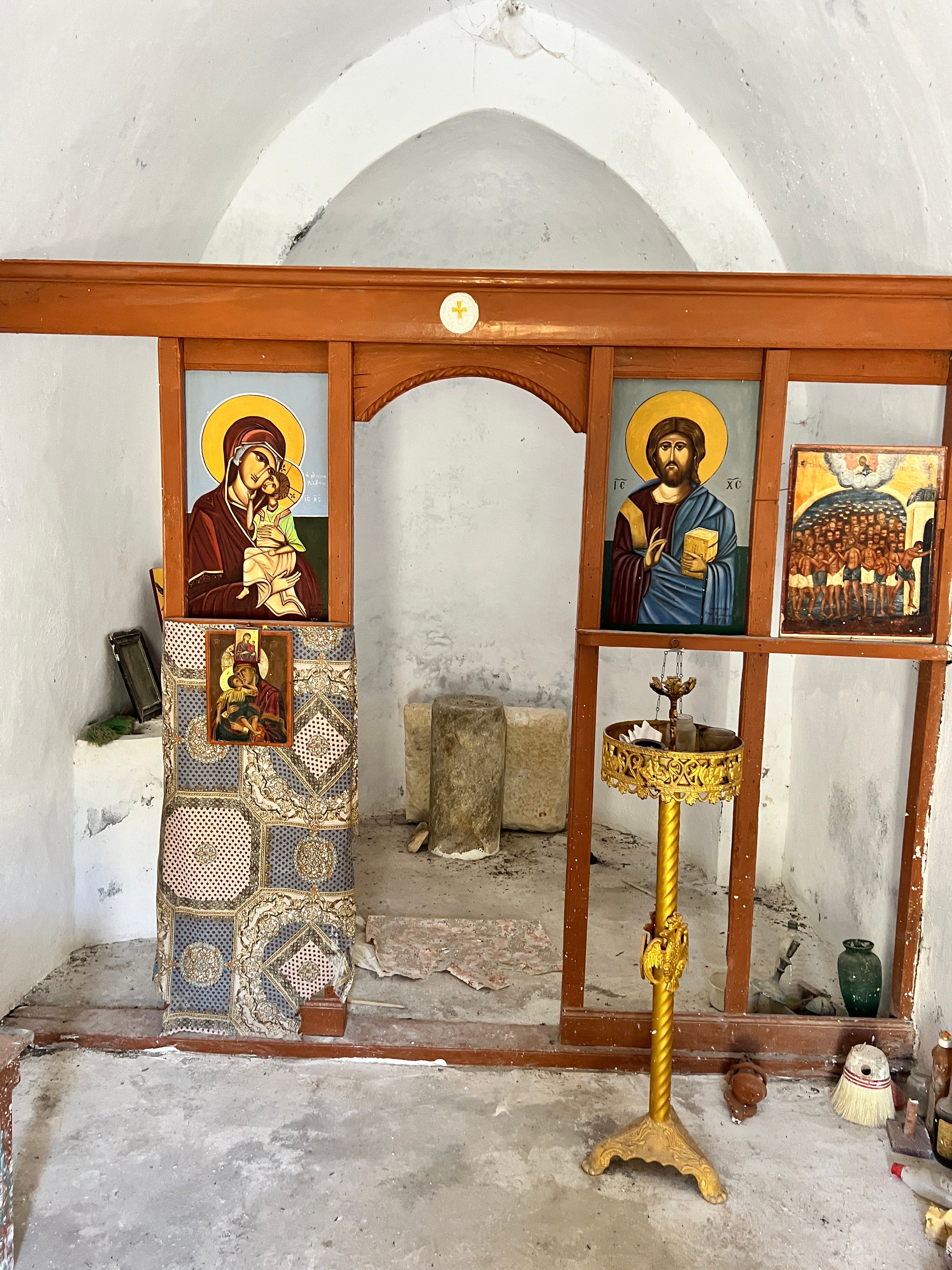
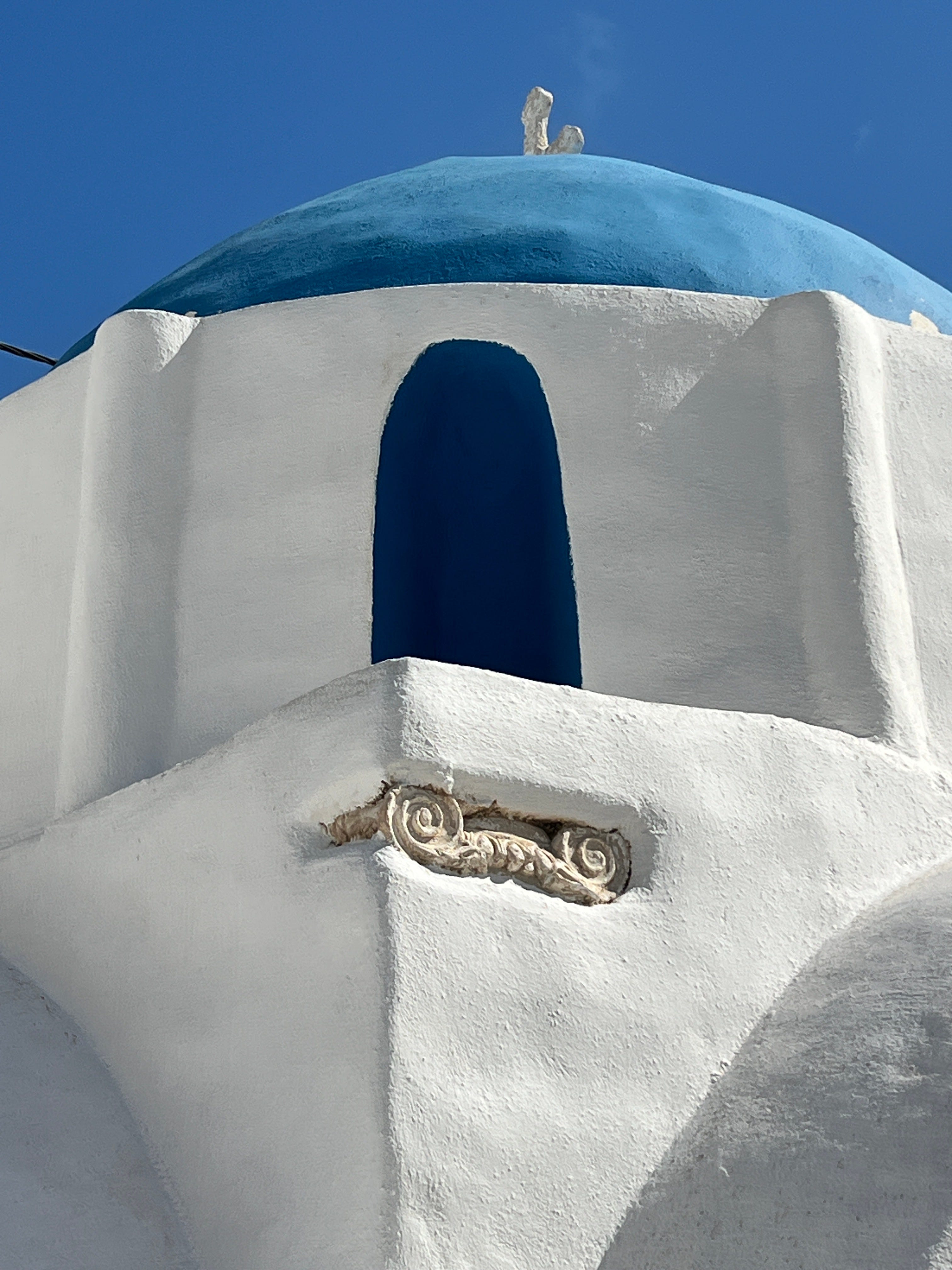
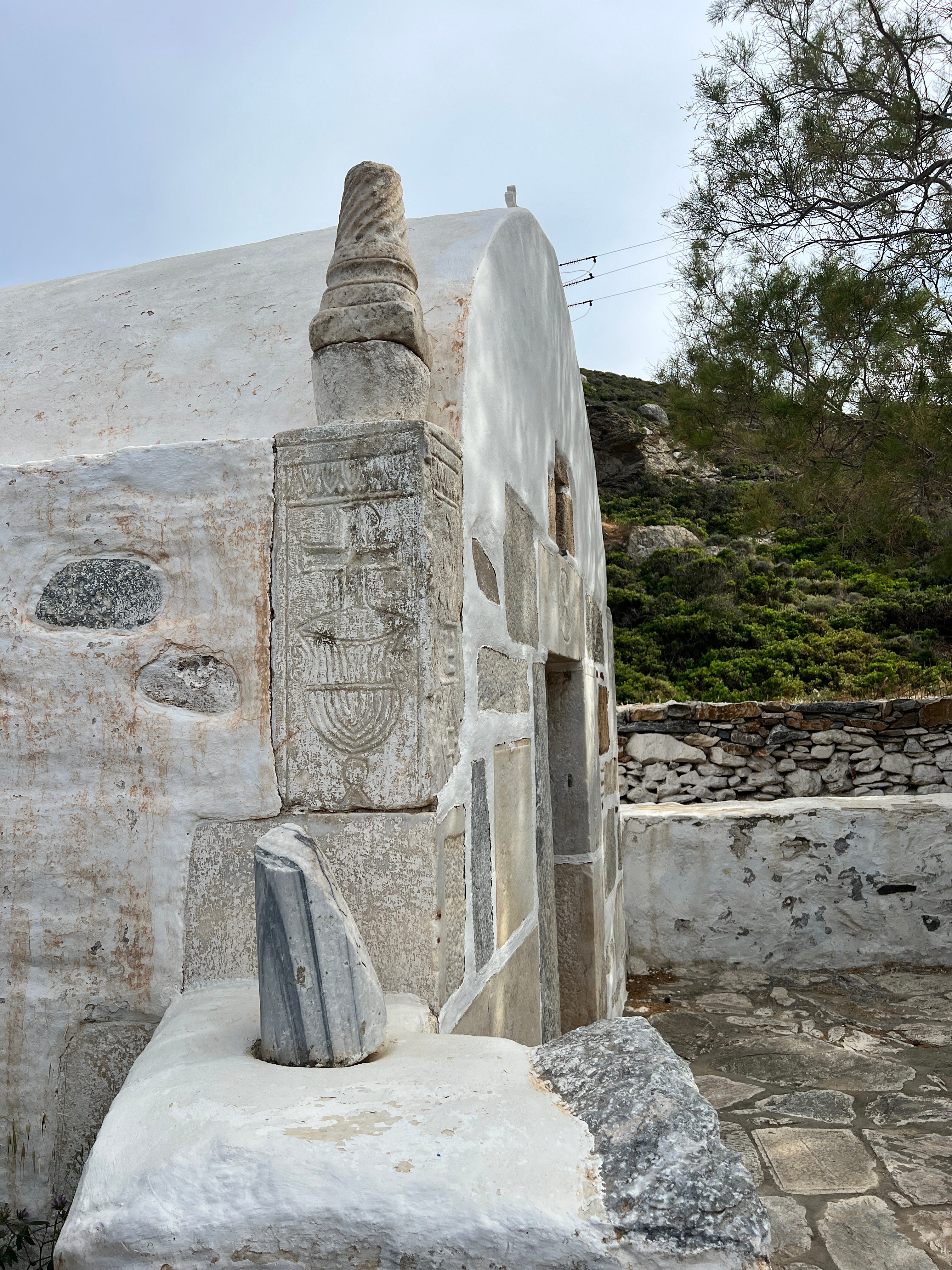
( a wee note on the images here - editing on my phone won’t allow me to add captions - these are recent shots of Greek chapels from the Cycladic isles, each featuring elements of pagan temples, such as columns etc)
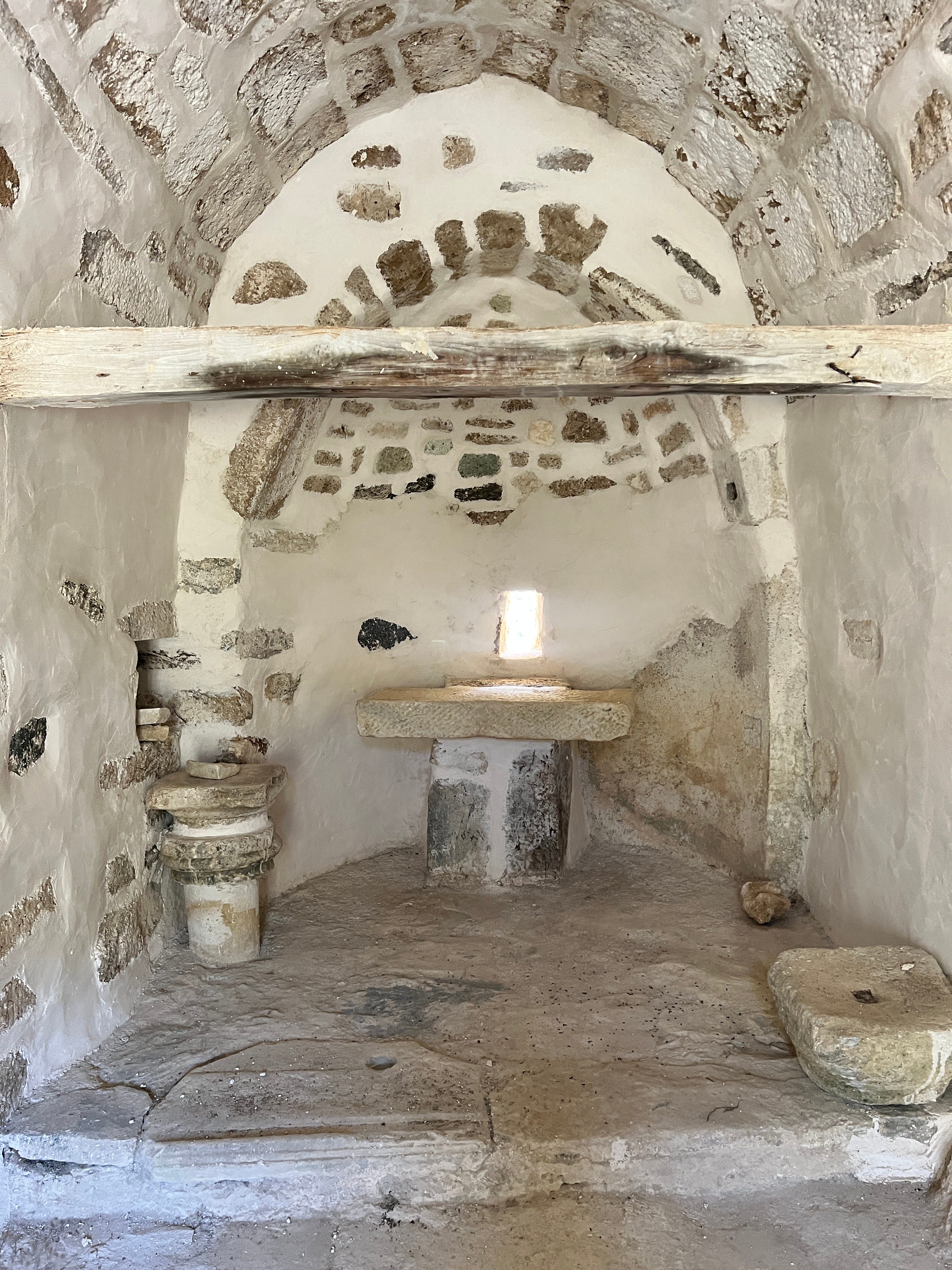
Travelling around the Cyclades, something has become very obvious to me. The tiny white chapels of the Orthodox Christian faith often incorporate elements of ancient temples into their design. This is because they were built upon, or beside, the sites of ancient deities of the Grecian pantheon.
To many of us this is a familiar pattern: we see it across ancient Europe. In fact we see it in every country where big daddy religions gain ground. Like its kin, Christianity was always a religion of aggression. There could only be one god, not a plethora of deities. A mono-god with flowing white beard and, most importantly, a penis.
Given this pattern I thought it might be interesting to seek other comparisons. For example, after my visit to the temple of Demeter a few weeks ago, I came across one of the Christian martyrs named Saint Demetra. I wondered what other deities lay behind the name of the Greek saints. Could it be that certain saints replaced particular deities? In this case who did St Michael or St Georgios replace.*
This isn’t so tenuous as it may sound. When your religion forces its one-god (and attendant angels and saints) upon a culture, paganism goes underground. I remember in Mexico in 1987, while backpacking, we visited a small church in the Chiapas region. There, the walls of the Catholic church were decorated with fir tree branches; to signify the forest/jungle cave. Squatting within a circle of candles, an old man chanted as he passed a hen over those that came to seek his healing – the illness inside the person was meant to be passed into the bird, which was then killed and, tainted, was only fit for the trash.
That this ancient, what we could call shamanic, practice was carried out in a church seemed strange, for it was no secret; the medicine man’s haunt was well known. And it was explained to us that the idols in the church weren’t exactly who they portrayed: Jesus was the solar deity, Mary the Madre Terra, the hosts of angels and saints bore the secret guises of ancient Mayan deities.
It’s obvious that the same process occurred in Europe at an earlier date. The proclamations and constant prohibitions ordered by the Church from the early medieval period, were still being enforced during the 17th and 18th centuries (and more rigorously under Protestantism) . People still convened at sacred wells,* or on hilltops to honour pre-Christian festivals, even if the details and specifics became muddied over time. Europe was left with a whole mash of folklore, some of which is little more than hollowed-out paganism bereft of its former meaning. But I believe that the specifics are there, if we choose to look and study them.
St Brigit is a classic example of this. Toted as a paradigm of Christian virtue, she’s a classic case of appropriation; from the eternal flame to her powers as oracle; all are traceable in earlier lore. In effect the original goddess, Brig, becomes a victim of spiritual power-play by an aggressive religion, intent on gathering souls into its fold. For surely even the hint of deities, spirits, et al are thorns in the side of any mono-god system. As the early church gained more prestige and power it sought to effectively annihilate all competition. In this case, the appropriation of saint over goddess is easily identifiable, as the earlier deity’s name is barely changed.
In France churches bearing assonant pairs of saints such as Ferreolus and Ferrutius, have been traced as appropriations of the cult of the divine twins, known to the Romans as the Dioscuri. In fact there are a plethora of saints whose names can be traced to earlier deities (see my Medana post for an example)
The early evangelists, gripped by religious fervour, wasted little time in setting up chapels and casting down statues and idols. Their assault wasn’t only intellectual, christians sometimes practiced a violence that pretty much set the tone for the next two-thousand years of mono-god worship. We can see this slide into ignorance and intolerance today.
So, back to Greece, where the white-washed chapels bear relics of the pagan past fixed into their walls like hunting trophies. Each chapel is named after some saint or prophet. That many snatched their powers from the original deity whom they replaced speaks volumes. St Nicolas wrests Poseidon from his throne and is honoured by sailors. Chapels in the wilderness honouring St Panagia (the Virgin Mary) replaced the huntress, Artemis. Dionysis was replaced by St George and Zeus the Thunderer by the prophet Elijah whose greek name, Profitis Elias marks out many a mountain peak in Greece.
This religious rebranding is something we should examine deeper. In effect these name changes map out ancient sites, actually revealing their locations. They should be seen, not as christian band-aids, but as places of power where old refrains linger. The power resides partly in name (for there lies meaning; magical or otherwise) , and we only need to bring their identities to light. Then we can visit them and speak their true names. What begins as a whisper may one day be raised as a shout.
Notes:
*See my book, Gods & Goddesses of the Celtic Realms and also Faeries of the Celtic Realms for more on this.
** St George was from Cappadocia.
A great read. Ginette