

Surfing the Inner Web
Gods of the Collective Unconscious

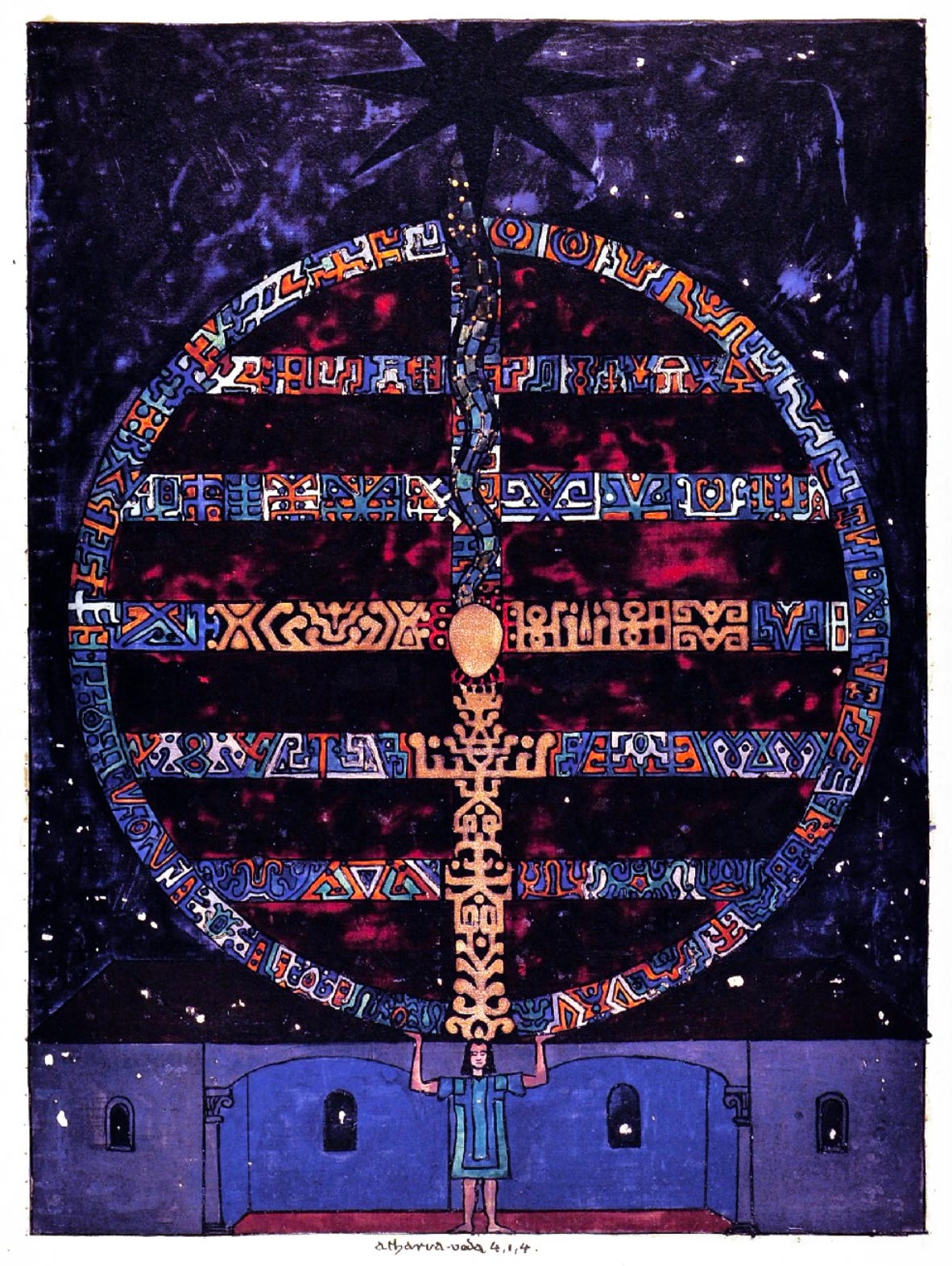
One of the most powerful ideas in Jungian Psychoanalysis is that of the collective unconscious. This was the concept that ultimately propelled Carl Jung to break from Freud’s Psychoanalytical Association. Jung felt that there was more to the human psyche than Freud’s reductionist ideas catered for (in Freud’s schema the complex mental life of a person was very much reduced to a brute sexual essence). For Jung, the theory was lacking. He believed that mythological and religious symbols played a large part in the psychic life of people.
Jung felt that there was another strata to reality, one that was purely mental, and it was just as important as the physical desire for sex. In effect, this sense of something ‘other’ ran counter to Freud’s materialism. He set up his own school of thought, effectively splitting the fledgling tree of psychotherapy in two.*
The notion that there existed a psychic foundation, common to all, was seeded within a puzzling dream that Jung had in 1909**. The dream took place within his house. From the familiar mooring of the first floor he descended to the ground floor, whose decor was like that of a house from the 1600s, and filled with dark, heavy furniture. He saw that there was a door to a cellar, and descended to find it resembled Roman ruins, with marble columns and pottery strewn about. He then noticed that set in the floor there was a stone block, with a great iron ring as a handle. He shifted the portal to reveal a sub-cellar, littered with bones, neolithic pottery and skulls.
This was the germ that led Jung to his theory of the collective unconscious – though it would be years until he’d be able to articulate it with clarity. In effect, from this point on, Jung embarked upon a journey to collate evidence that would prove his fledgling idea. The concept was cemented through his studies of alchemical and esoteric traditions, the testaments of his patients and were also galvanised by his own experiences. However, he was to admit that;
“None of my empirical concepts have met with as much misunderstanding as the concept of the collective unconscious psyche, a functional system consisting of pre-existing forms of a universal, collective and non-personal character, which does not develop individually but is inherited.”
He came to the conclusion that the occurrence of archaic symbols in the personal psyche are formed in a collective ‘mind-space.’ It is purely mental, and therefore immaterial. A space that is shared and common to all. In Jung’s schema, the psyche is split in three: the conscious mind, the subconscious mind and the collective unconscious. The first two are personal, individual, and yet they are built upon the foundation of the collective, which is much more ancient. Within the collective unconscious, Jung postulated, archaic symbolic patterns roam the psychic collective web of their own accord. These are Jung’s Archetypes: the pre-existent instinctive behavioural patterns that ‘pursue their inherent goals’ and ‘continually influence our thoughts and feelings and actions.’
Jung’s theory goes that Archetypes such as The Hero, The Mother, The Wise old Man, and a host of others, become templates, steering us in our daily lives. These archetypes are evident in mythology, and each finds parallels across different cultures. Much of his reasoning behind the collective unconscious was derived from patterns that occur in mythology and religion – but Jung maintained that these archetypical patterns were inborn and not learned.
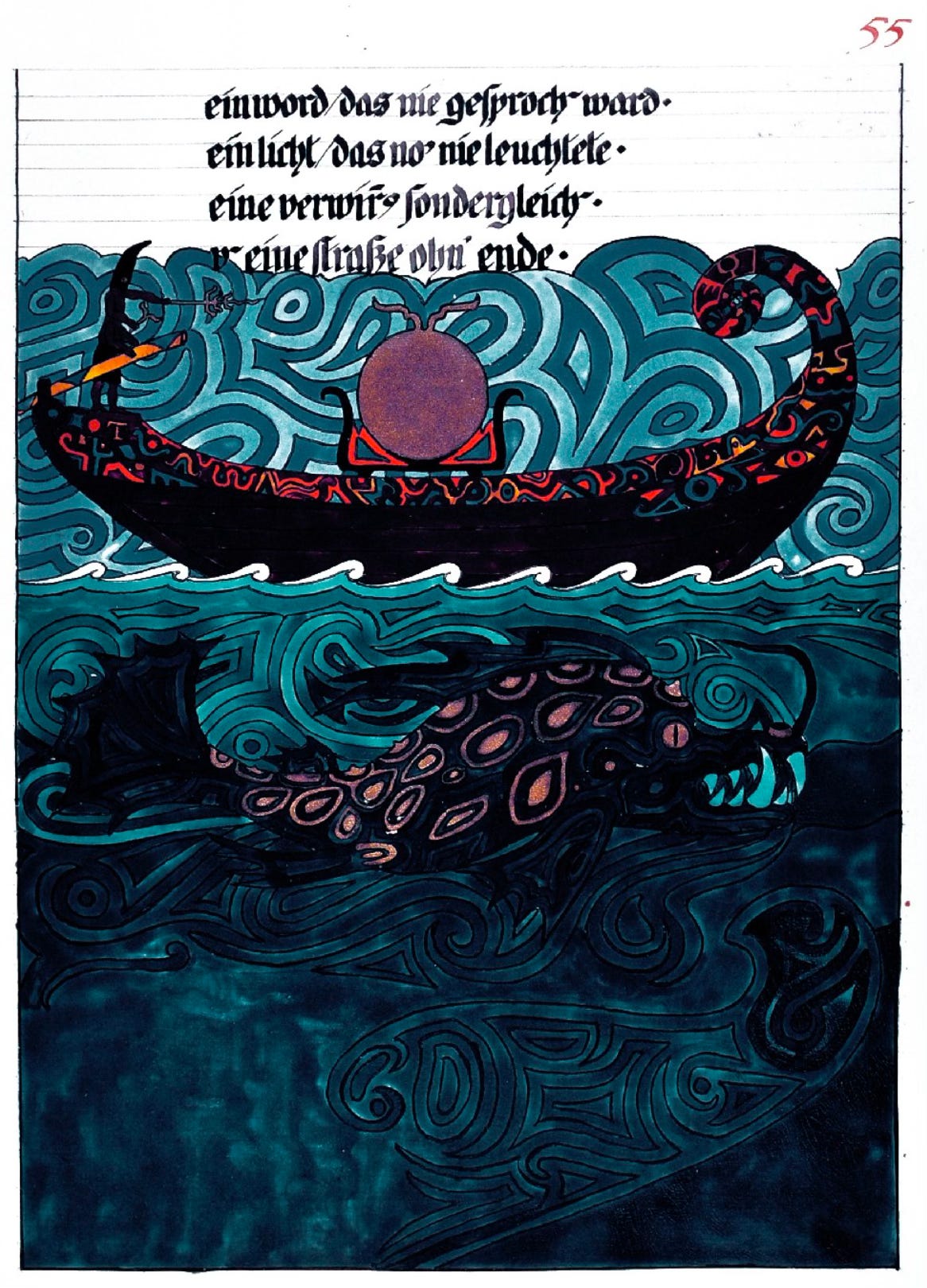
While Jung always maintained that his theory of the collective unconscious was empirical, it remains outside of material, just as thought itself remains so. Jung’s work is considered mystic by some. Much of Jung’s esoteric thought only came to light after his death (the Red Book, for example). Spiritual matters were of great importance to him, and yet he struggled to maintain scientific value in an academic world governed by ‘rationality’ and distain for anything mystical. Thus Jung attempted to keep his discoveries within the framework of the scholarship of his times. Archetypes could be ‘rationalised’ as ‘mental instincts’; the psychological equivalent of physical instincts – for why shouldn’t imagination, perception and thought possess instinct?
Archetypes, he writes, work toward their own ends. They are subject to laws of their own, and possess a kind of consciousness – a free will, so to say. They can be acknowledged, but never wholly accessed – the collective is too deep, too embedded. Archetypes can appear in the form of dreams and visions. Recognised, these forces can be worked with, or upon, and wider issues resolved. Un-recognised they can threaten to rise up from the depths:
“Since Neuroses are in the most cases not just private concerns, but social phenomena, we must assume that archetypes are constellated in these cases too. The archetype corresponding to the situation is activated and as a result those explosive and dangerous forces hidden in the archetype come into action, frequently with unpredictable consequences. … If thirty years ago anyone had dared to predict that our psychological development was tending towards a revival of the medieval persecutions of the Jews, that Europe would again tremble before the Roman fasces, and the tramp of legions, that people would once more give the Roman salute, as two-thousand years ago, and instead of the Christian cross an archaic Swastika would lure onward millions of warriors ready for death – why, that man would have been hooted at as a mystical fool.”
So, the collective unconscious is a sort of shared mind-web. Within it great archetypes roam, blustering into the conscious mind of an individual in the form of dreams and symbols, but also with the ability to affect millions of people and direct real-world events. In periods of mental agitation and crisis these symbols arise, and often bear relevance to the individual, if they can be recognised and analysed.
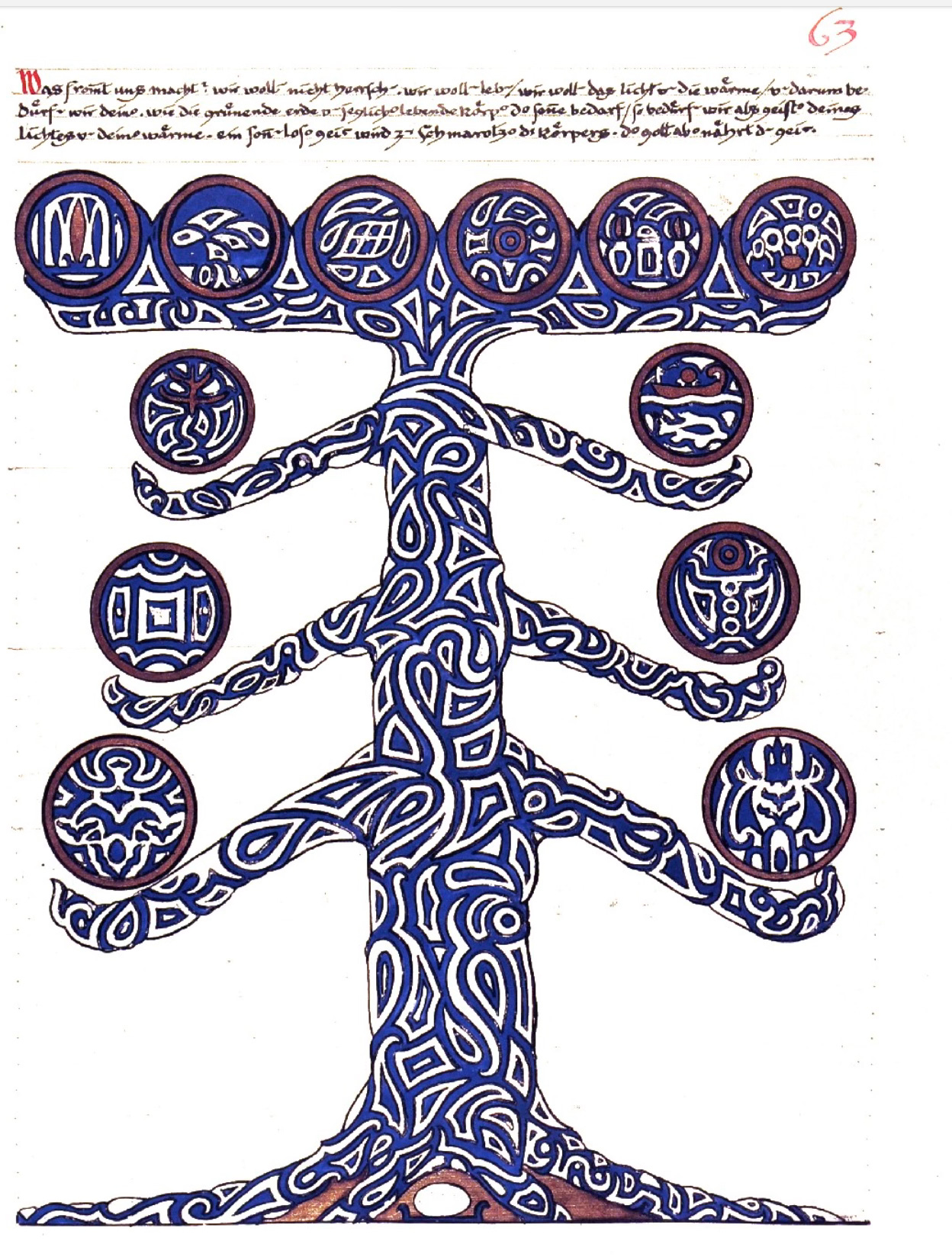
The idea of a collective unconscious could also be said to account for past movements in which identical ideas took shape in locations remote from each other (obviously, this was before the onslaught on instant messaging). This is especially apparent in the mythological sphere, where archetypes rear from the past with alarming regularity, and myths are stunningly similar. But, in more modern times, we have accounts of inventions occurring within days of each other across the globe at a time when communication was ponderous to say the least. Could it be that such ideas themselves can surf the unquantifiable space between us? That these zeitgeist movements are seeded in the collective unconscious? The founders of punk, in the late 70s, used to quibble about where the movement started: USA or UK or Spain or... What if it just occurred everywhere? That the notion was born into fruition by the youth of the time almost simultaneously across the globe? Shifted into our reality by the machinations of unfathomable archetypes. Could this account for language, ancient art and symbology?
I do find something very appealing in Jung’s work, even if I’m merely skating across its surface. These are powerful ideas. The mind is still the most immediate and uncharted territory we can speak of. Jung sought to map some of it out. Like any scholar, he used those of his predecessors to aid him. These are found in myth, in alchemy, and the occult, whose works are like those of ancient cartographers, mapping the intricacies of the mind as best they could.
Notes:
*And from these splits many other branches have formed (and newer saplings nurture beneath its canopy).
**Such revelatory episodes have been documented by other scientists, inventors (see) and are a profound experience for those who both have and act on them.
References:
Jung, Lord of the Underworld – Colin Wilson
C G Jung – E.A Bennet
The Portable Jung – Joseph Campbell
Toilichte article! Agus ealain breagha!
This is truly fascinating. I find myself stumbling upon more and more of Carl Jung's work, as the years pass and I wonder how one individual could achieve / uncover / share so much. It seems he had easy access to the field of consciousness and was able to bring back gems for those of us who are still searching for the gateway...