

Through the Infinite Field
Time in the Otherworld

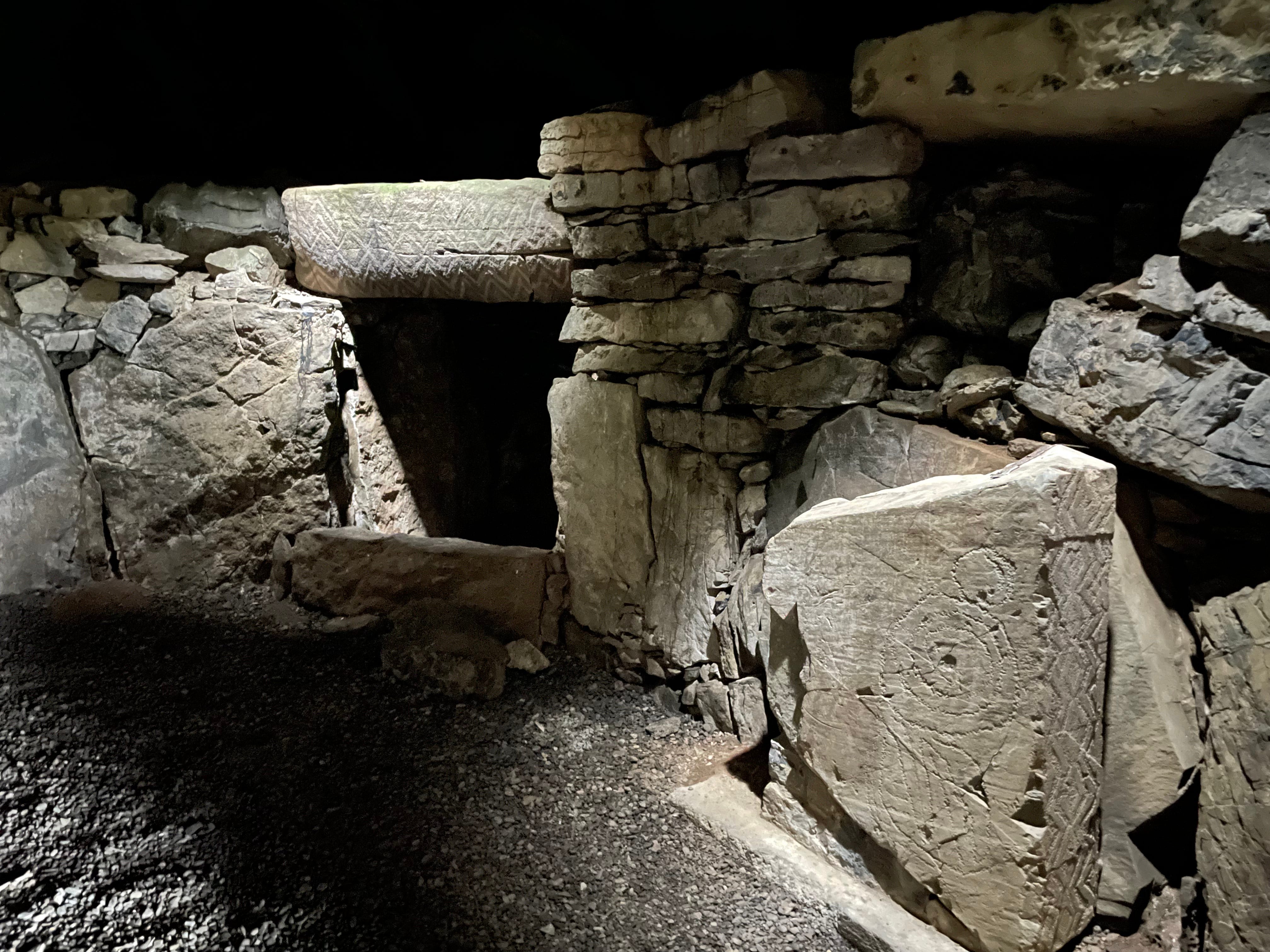
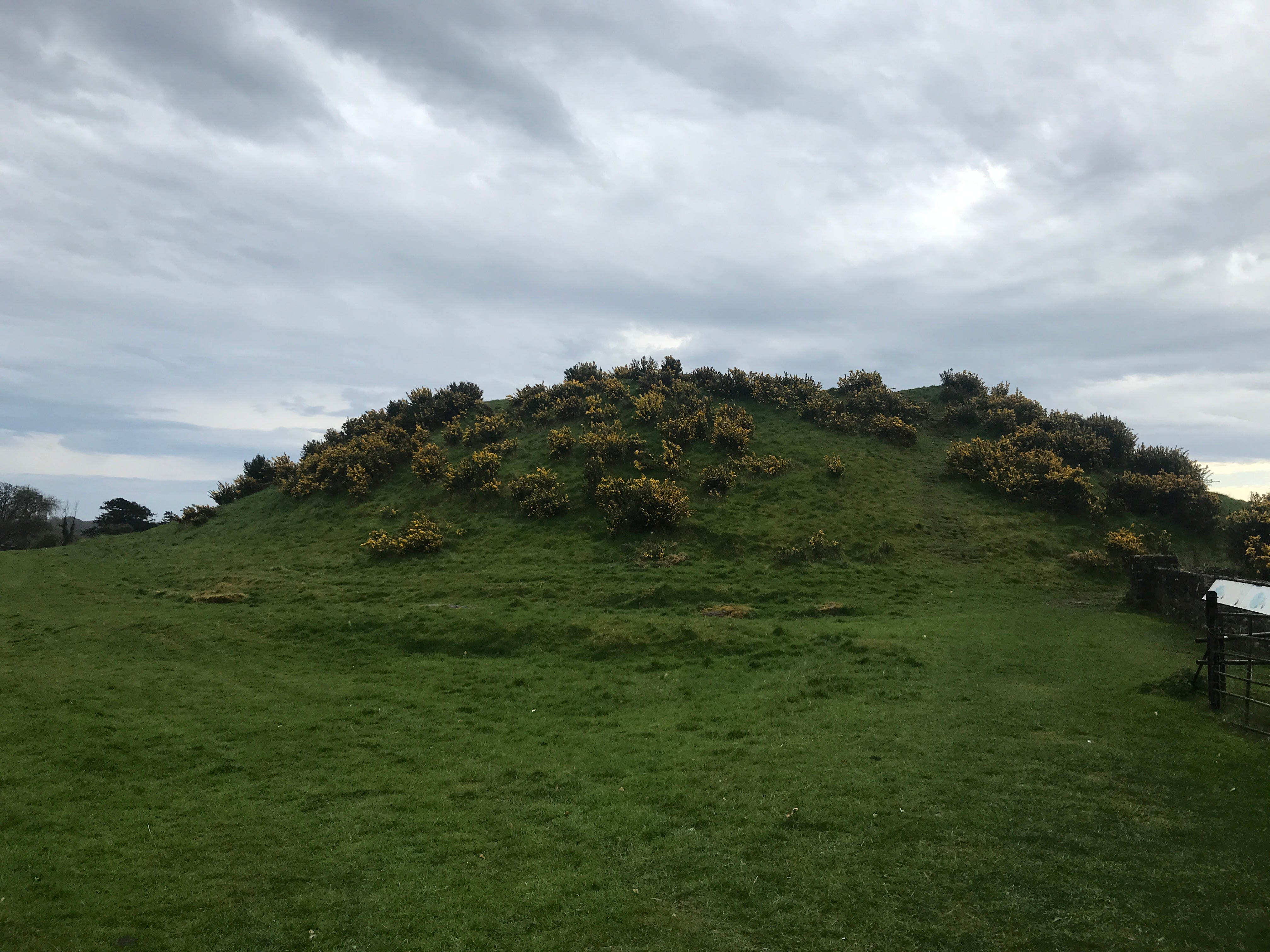
The Celtic Otherworld was a realm described as being beneath the old mounds, in hillsides, on islands and beneath lochs… yet these places are nodes; symbolic apertures and portals where the link between the no-realm of the Other is felt to co-exist with the now-world that we inhabit. The Sídhe were the halls of the immortal gods, zones through which the entire realm of the Otherworld could be accessed.
A telling meme that flows throughout faerie lore is the distortion of time, experienced upon encountering the Otherworld. Even when these realms are encountered after long voyages at sea, those that return to the shores of the now-world are in danger of being turned to ash as they step upon the shore. Such is the case of Bran Mac Febail’s journey. And in the strange story of Tucait Baile Mongáin, Mongan and his wife, Findgern, go to the great assembly at Uisneach to celebrate the accession of a new king at Tara. Sheltering from a storm, they camp aside a cairn and find themselves in the magical other realm. Mongan slips into a trance and relates the story of his previous adventures to Findgern. Waking the following day, they discover that a whole year has passed and they are no longer at Uisneach but in Mongán’s northern stronghold.
Otherworld time can also become compacted and sometimes years spent within Otherworld haunts are unmarked by the passage of time in our world. Like the fluid nature of its inhabitants, so too the time that flows between the realms. Despite these spatial anomalies it’s a given that, although there are junctures where access between worlds can be gained, the Otherworld is present all the time – hidden and obscure though its presence may be. It remains behind a veil; this fabulous realm with its poetry inspiring rivers and fountains, its cauldrons of plenty and self-replenishing pigs. It is perpetually encapsulated in its Golden Age, an everlasting oenach (tribal assembly) where games are played, races held, feasting had while poets compete in trials of eloquence. It is tantalisingly close and its presence fills the stories of the medieval annalists who committed oral traditions of earlier centuries to paper.
In the legends that surround the ritual complex of Bru na Boinne, we also find tantalising distortions of time. There are three versions of how Oengus mac Óc secured tenure of the great mound of Sídhe an Brugha. In the first telling it was his father, In Dagda who lived there. After the Milesians invaded, the Tuatha de retreated into the Sídhe. It was Dagda who portioned out the old mounds for his people. His son asked him to stay in Sídhe an Brugha for a night and a day. His father agreed, but when it came time for Oengus to depart he shook his head and told his father: “It is manifest that the entire world is contained in a day and a night, and this is what has been allotted to me.” Other versions tell that it is Elcmar and his wife Boand who live there. The Dagda tricks Elcmar to carry out an errand, and distorts the passage of time so that nine months passes like a day. In this time Dagda woos Boand and makes her pregnant. Oengus mac Óc is the product of this union. He is the Young Son, conceived and born in the span of a day. The Dagda then advises his son how to win the Brugha from Elcmar: Oengus is to challenge Elcmar by threatening his life unless he allows him to remain within the mound for a day and a night. This is carried out to similar effect for: “it is in days and nights that the world is spent.” The third version is a later tale in which Manannan is overseer of the Tuatha de Danaan. He instructs Oengus how to use a charm to win the mound from Elcmar: “Command him not to come again to the house from which he departs until ogham and achu are mingled, until heaven and earth are mingled, and until sun and moon are mingled together.” In other words, never.
In these tales, united by the fact that Oengus wins the mound, the power of word and time play vital roles. Given the nature of modern archaeology and all it has revealed about the Boyne Valley complex, this makes sense. Time, specifically the midwinter solstice, was an important factor in the megalithic religious rites that once occurred there. That the memory of this appears ingrained in these localised myths says a lot to the endurance of very ancient lore.
The nearby mound of Dowth bears a myth that also invokes the suspension of time. It is told that there was once a king named Bresal Bódíbad who desired a great tower be built that would reach into the heavens. His sister went to make a spell that would make the sun stop in the sky, so that the workers would have a long day to complete their task. However, Bresal snuck upon his sister and raped her, lending the place an appellation, Fertae Chuile, the ‘tumulus of sin’. Night came upon the land and the workers ceased their labours and named the place Dubad, meaning darkening.
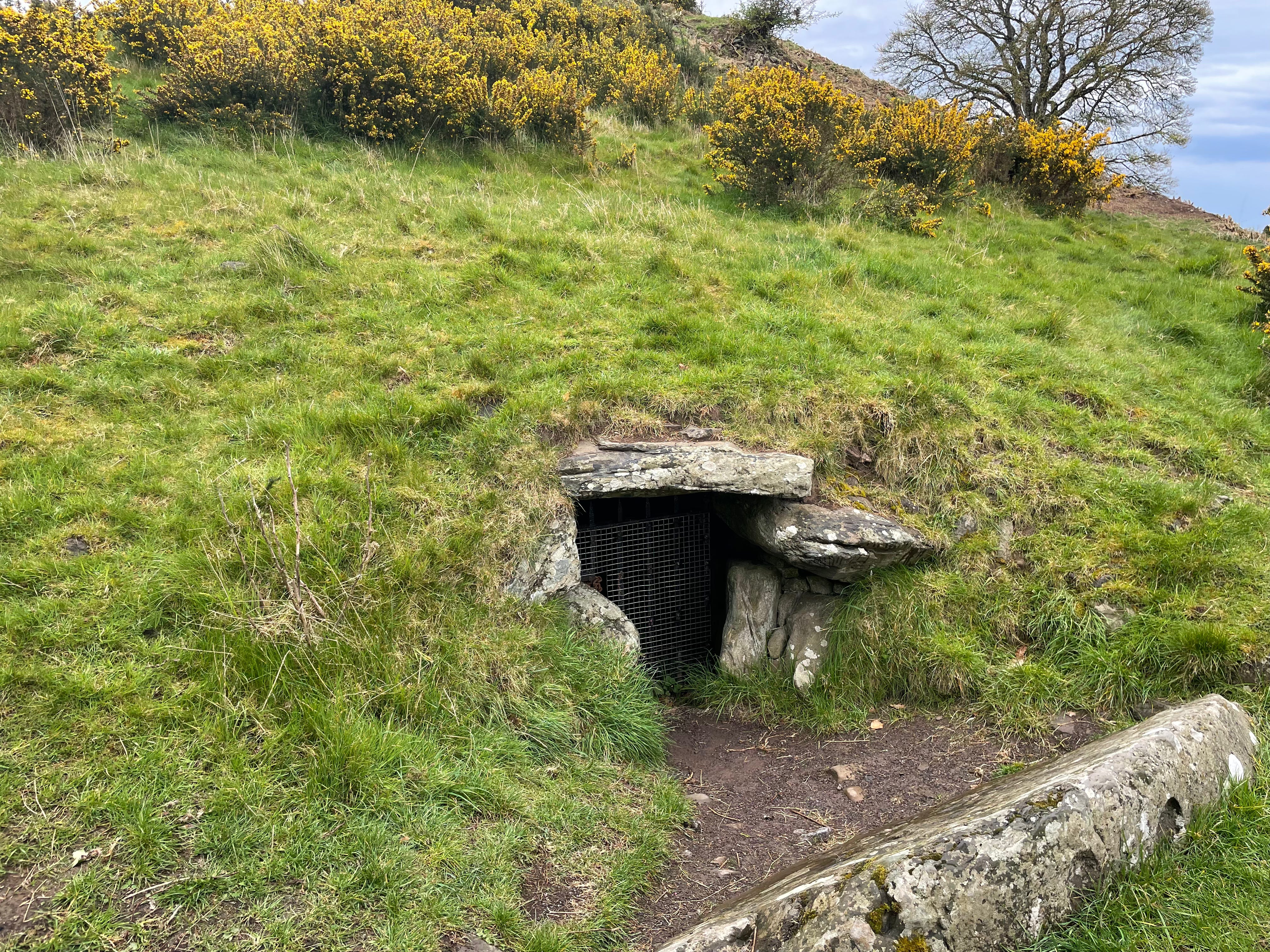
To my mind these tales raise an awareness of time and how its flow is altered and changed by accessing deeper worlds within. Time flows and it is marked by the rise of day and night, but it also flows with relative abandon, shortening and lengthening as our will degrees, or when pressure is off and on.
When we blink from this existence, what is time? Do we step outside it? Do we move forward through the grace of some other realm where Otherworldly paradigms swirl with chaotic resonances of their own?
Whatever the answer, tread warily and heed the warning of those who fell within the mound. For should you return from such an adventure, tread with care for fear of dust.
And, if you feel like it help support my work by…

More about Gods and Goddesses of the Celtic Realms? I have a book all about them HERE