

Zoroaster & the Dragon
Animism, Dragons & A Word About My Book

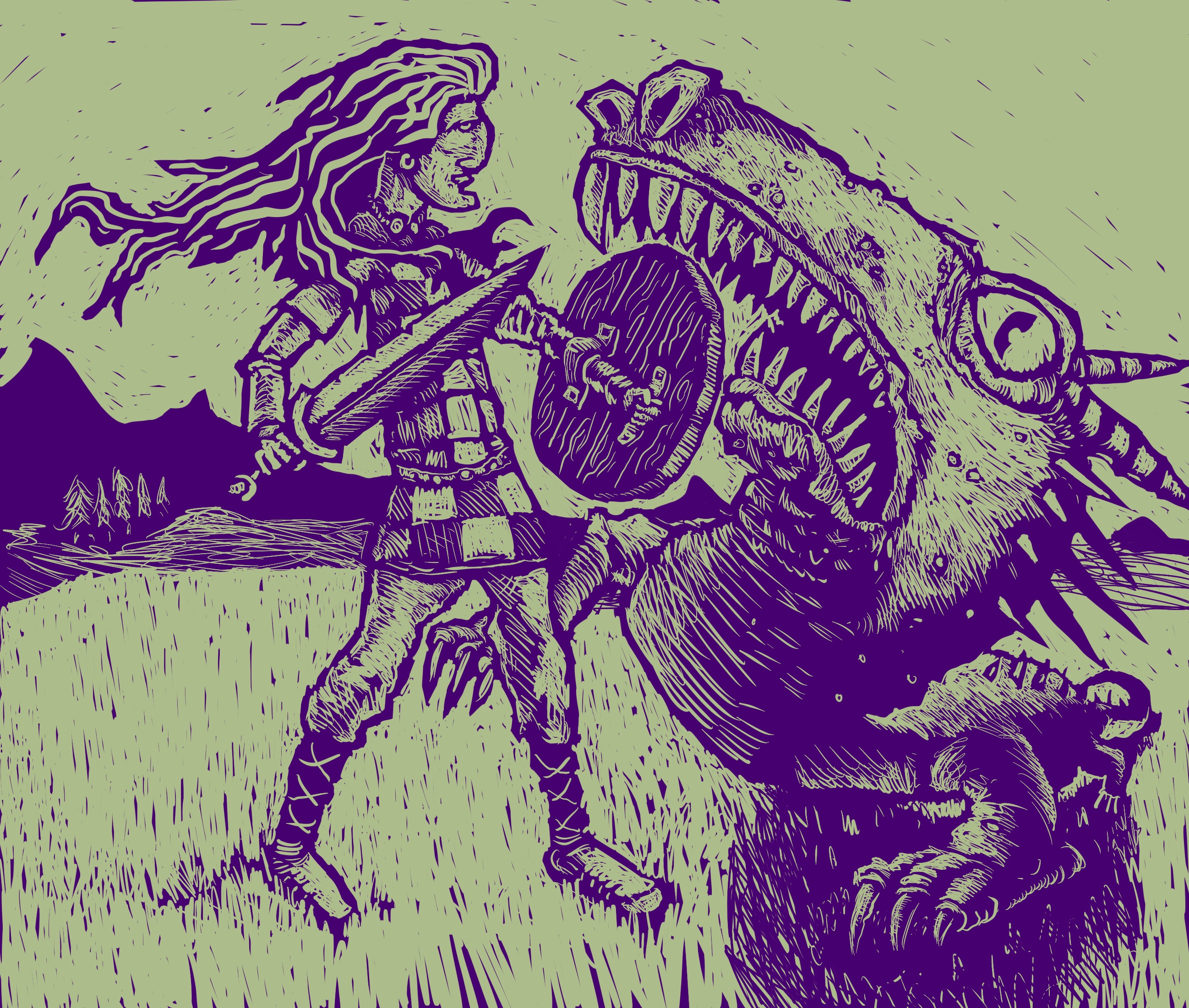
I believe that there have been a number of ancient religious schisms, some of which are traceable in legend. For example, during my research for Dragons of the Deep, evidence of some form of schism between animist-based beliefs and anthropomorphised gods became apparent. In the text I trace this through many examples. It’s paralleled by a shift toward a domination of male-centric deities over the feminine. This is also evidenced by what I term the Drakonae: who are invariably priestesses, with attendant serpent-dragons. The regularity and similarity of the myths, and their geographical dispersion, point to a once widespread belief in everything the Drakonae epitomised. The fact that the tales are most often centred around bodies of water suggests their animist origins.
The schism that displaced these beliefs didn’t happen overnight. This wasn’t a religious revolution. More, I suspect, a gradual decline as such practises fell from favour. However, they were powerful enough to resist monotheistic movements, and the lore of wells, lakes and their attendants, persisted – even if monotheists occluded the truth of their origins.
Zoroastrianism is a good case in point. This dualistic religion clearly delineates the concepts of good and bad into different entities. Ahura Mazda is the divine light, the good lord, who is set against his arch enemy, Angra Mainyu. Whereas Ahura Mazda is concerned with all that is good and beneficial in life, Angra lets loose the destructive. Zoroastrianism inducted its followers to align themselves with Ahura Mazda in the fight against evil. It is telling that many of the demons of Zoroastrian cosmology were the deities of other cultures. Zoroastrianism was very anti-Hindu, its demons are their gods and the religion appears to have been a rebuke against the ways of polytheism. The emergent religion was also dead set against the worship of land-based spirits (animism). This antagonism between the old faith and the emergent can be seen in the tale of Ahi Dahaka, the great dragon.
As with legends the world over, some are purely mythological while others retain the hint of history about them. Such is the case with Armenian, Ahi Dahaka (historicised as Zöhak), and the heroes whose destiny it is to defeat the dragon when it rises from its grave on Mount Damavand. This hero is Keresapa (also known as Garhasp) whose lineage descends from a pedigree of dragon slayers, including Faridun (these heroes become somewhat conflated in various accounts).
In the case of Keresapa, of interest is the witch in whose company he falls. This character is known as Knãthaiti – also named as a being known as a Pairika, and sometimes as the Pairika Knãthaiti. She leads Keresapa astray, turning him against the ‘pure’ faith of Zoroastrianism. Because of this apostasy, his immortality is taken from him and Knãthaiti finally betrays him, surrendering Keresapa to his enemies. However, the Pairika correspond to the Hindu and Buddhist Apsara – these are described variously as a type of water-nymph or faerie being. Should it surprise us that they are associated with the Nǎga who also dwell in watery lairs? These are all manifestations of the animist spirits of the waters.
For the crime of returning to the worship of idols, Keresapa was banished to a purgatorial realm. There he remains in a deep sleep, waiting for the time to come when the Great Dragon will escape his mountain prison. Upon that day Ahi-Dahaka and the hero will battle to the death.
Perhaps it is Zoroastrianism that kick-started a drive against polytheism and animist beliefs: a trope continued by the Abrahamic religions. After all, there are many similarities between these religions and without doubt the Judaic religion was heavily influenced by that of Zoroaster, and its offshoots such as Mithraism (which was once a rival to the emergent Christian religion).
Dragons of the Deep is a study into this and other phenomenon that surround the dragon mythos. It is the result of a number of years research, the pendulum of which was setting ticking back in 2013 while travelling around Greece and Turkey. I had long puzzled over certain imagery that I came across while hunting out designs to carve on stone. Greek legends are filled with tales of gods slaying great serpents, and of serpents that dwell beside wells. Images I saw there seemed to slot into place, and I found the dragon-slayer myth too intriguing to ignore. The book seeks to unearth some of the origins behind these tales in an attempt to better understand the fate of ancient lore. The hope is that by offering a grounded text, based on scholarly research, it will act as a foundation for animists, pagans and polytheists to build upon. I believe that the symbolic and mythological aspects of dragon-lore have much to offer. There is a need to instil nature with spiritual meaning. Locked within the legends that tell of the domination of the dragon, is a deeply profound element of ancient faith that deserves to be revitalised in our wanting times.
And if you really feel like it

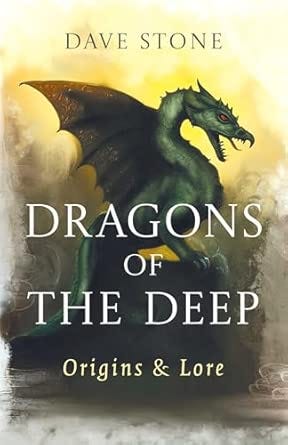
And My forthcoming book, Published by the folks at Moon Books, is all about Dragons – Link is HERE
Have you read about the Hawaiian beliefs around their watersheds?
The Sacred Spine by Shannon Wianecki - Sept/Oct 2012 Maui Magazine
“Ancient Hawaiians believed that if a moʻo guardian received proper nurture, she would respond in like manner, ensuring fat harvests and healthy stream flow. But if she were neglected, she would wreak havoc. The underlying philosophy was respect for the land — a basic tenet of Hawaiian culture.
Kihawahine’s presence in the fishpond surrounding Mokuʻula assured the resident royals of prosperity, and gave them authority over the waters that flowed down the West Maui Mountains and bubbled up in the pond’s natural springs
Perhaps it is time for the moʻo to resurface, to once again defend precious sources of fresh water and to symbolize the unbroken line from the genesis of Hawaiian history to the present. The ancestors remain, even if they’ve been forgotten.”
I've been waiting for this one! Really looking forward to it - thank you! 🤗